

Curriculum
- 1 Section
- 2 Lessons
- 51 Weeks
Overview
Learn Tbal Online with a Step-by-Step Method
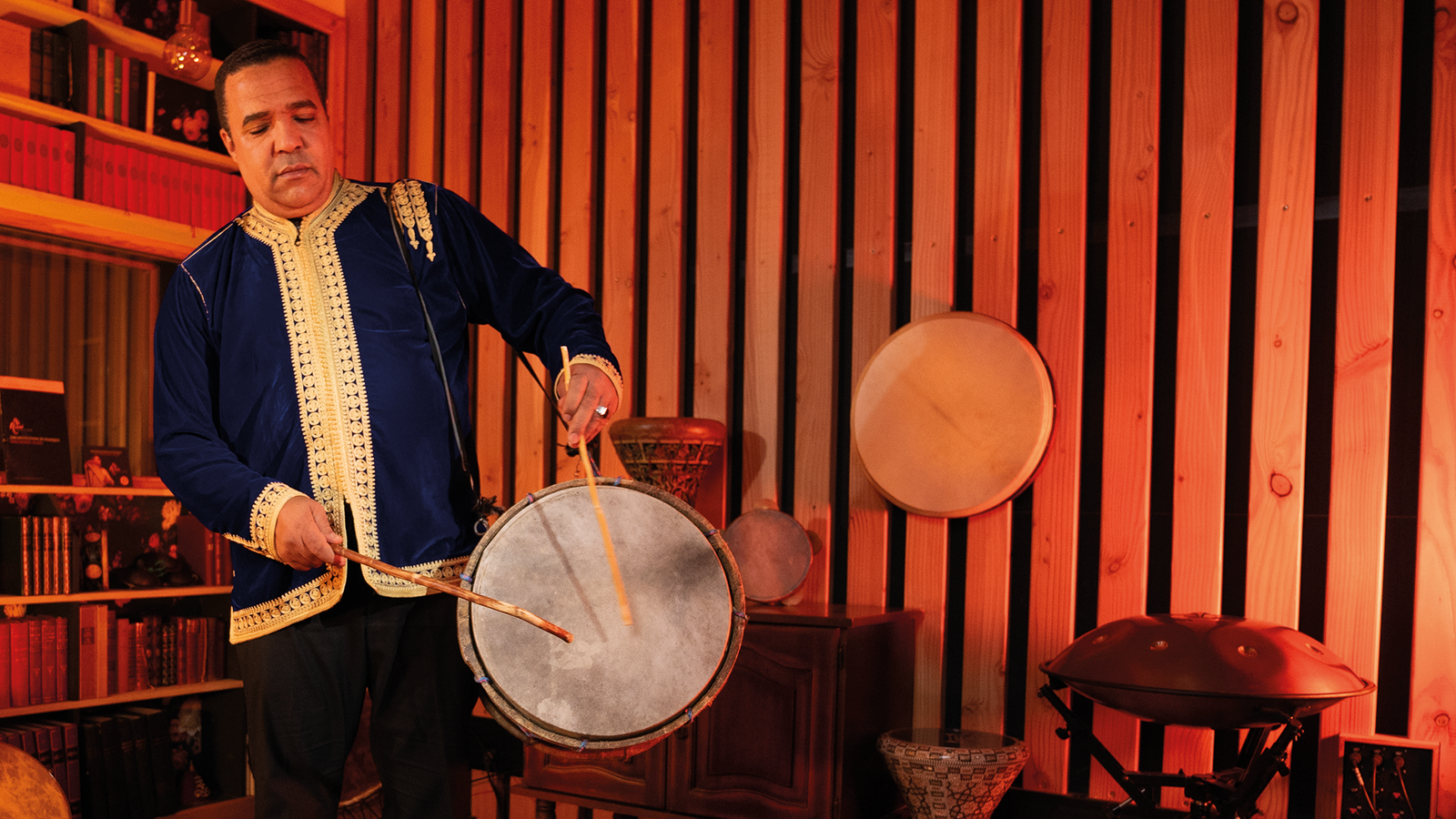
The Tbal is one of the most iconic drums in traditional Arab music. Found in both Morocco and Lebanon, it has accompanied ceremonies, celebrations, and traditional dances for centuries.
With Melonea’s online Tbal course, you’ll discover a progressive learning method designed to help you master the fundamentals of the instrument, develop your sense of rhythm, and perform traditional Moroccan and Lebanese repertoire.
Whether you’re a complete beginner or an experienced percussionist looking to expand your skills, these lessons are designed for all levels.
What is the Tbal?
The Tbal is a large double-headed drum played with sticks. Depending on the country, its construction, sound, and musical role may vary, but its primary purpose remains the same: providing energy, maintaining the pulse, and supporting traditional ensembles.
At Melonea, you’ll explore two major traditions:
- Moroccan Tbal, especially used in Gnawa ceremonies, accompanying the qraqeb and spiritual chants.
- Lebanese Tbal, an essential instrument in Dabke ensembles, the famous traditional dance of the Levant.
Each tradition has its own playing techniques, rhythms, and musical identity.
Moroccan Tbal and Lebanese Tbal
Moroccan Tbal (Gnawa)
In Morocco, the Tbal is found in many traditional musical styles, but it plays a particularly important role in Gnawa music.
It creates a powerful pulse that supports the qraqeb, the singing, and the different stages of the ceremony. Playing the Tbal requires consistency, precision, and excellent rhythmic control.
The goal is not to play flashy patterns, but to maintain a solid groove that allows the entire ensemble to perform together.
Lebanese Tbal (Dabke)
In Lebanon and throughout the Levant, the Tbal is closely associated with Dabke, one of the region’s most popular traditional dances.
The percussionist must produce a strong, energetic, and consistent rhythm that drives the dancers throughout the performance.
The rhythms are generally based on simple meters and require excellent timing, coordination, and endurance.
Why Learn the Tbal?
The Tbal is an excellent instrument for developing strong percussion fundamentals.
Learning the Tbal helps you:
- improve your sense of rhythm;
- develop steady timing;
- build coordination between both hands;
- understand the role of percussion within an ensemble;
- discover Moroccan and Lebanese musical traditions.
Although the basic techniques are relatively accessible, mastering the Tbal requires precision, consistency, and careful listening.
A Progressive Learning Method
Melonea’s lessons follow a logical progression.
You will begin by learning:
- how to hold the sticks correctly;
- the proper playing position;
- basic strokes;
- timing and consistency exercises;
- your first traditional rhythms.
Once these fundamentals are mastered, you’ll gradually explore traditional Moroccan and Lebanese rhythms along with various rhythmic variations.
This structured approach helps you build solid foundations while avoiding common bad habits.
Music Comes First
At Melonea, technique always serves the music.
Our goal is not simply to help you play faster or louder, but to teach you how to accompany musicians, singers, and dancers with confidence, precision, and musicality.
Throughout the course, you’ll learn how to:
- maintain a steady tempo;
- produce clean and consistent sounds;
- support the dynamics of an ensemble;
- understand the musical role of the Tbal.
Why Choose Melonea?
There are countless Tbal videos available online.
However, learning an instrument requires more than isolated tutorials—it requires a structured method.
Melonea offers:
- a clear and progressive learning path;
- high-quality video lessons;
- easy-to-follow explanations;
- practical exercises;
- instruction from Ali Alaoui, a state-certified music teacher specializing in Arab percussion.
Your subscription also includes access to all other percussion courses available on Melonea, including the Darbuka, Bendir, Riqq, Daff, Taarija, and Qraqeb, as well as Body Rhythm, Handpan, and Arab World Polyrhythms.
Learn Tbal Online at Your Own Pace
All lessons are available on your computer, tablet, or smartphone.
You can learn whenever it suits your schedule and replay every lesson as many times as needed.
This flexibility allows you to progress comfortably at your own pace, wherever you are in the world.
Frequently Asked Questions
Can I learn the Tbal online?
Yes. A structured online course allows you to progress effectively through video demonstrations, guided exercises, and step-by-step lessons.
Are these courses suitable for beginners?
Absolutely. No previous musical experience is required.
What’s the difference between Moroccan and Lebanese Tbal?
Moroccan Tbal is especially associated with Gnawa music, while Lebanese Tbal is mainly used in Dabke. Each tradition features its own rhythms, playing techniques, and musical role.
Do I need to read music?
No. The lessons rely mainly on listening, observation, and practical exercises.
How often should I practice?
Practicing for 15 to 30 minutes several times a week is enough to make steady progress.
Can I watch the lessons on my phone?
Yes. The platform works on computers, tablets, and smartphones.
Does the subscription only include the Tbal course?
No. A single subscription gives you unlimited access to every course available on Melonea.
Start Learning the Tbal Today
The Tbal is much more than a drum. It is an essential instrument in the musical traditions of Morocco and Lebanon, capable of driving the energy of an entire ensemble or dance performance.
With Melonea’s online Tbal lessons, you’ll progressively learn the essential techniques, discover the rhythms of Moroccan Gnawa Tbal and Lebanese Dabke Tbal, and develop your rhythm, coordination, and musical expression.
One subscription gives you unlimited access to all Arab percussion courses on Melonea, along with every new lesson added in the future.
Course Features
- Lectures 2
- Quiz 0
- Duration 51 weeks
- Skill level All levels
- Language English
- Students 4
- Assessments Yes
You May Like

BODY RHYTHM (ENG)
Learn Body Rhythm with a Step-by-Step Method Would you like to develop your sense of rhythm, improve your coordination, or discover a new way of...

HANDPAN (ENG)
Learn Handpan with a Step-by-Step Method Would you like to learn the Handpan, discover a unique musical instrument, or develop both your sense of rhythm...

POLYRHYTHMS
Discover the Polyrhythms of the Arab World Arab World polyrhythms represent one of the richest treasures of Middle Eastern and North African musical heritage. Passed...

DARBUKA (ENG)
Online Darbuka Lessons: Learn with a Step-by-Step Method Would you like to learn the darbuka online, discover the rhythms of the Arab world, or improve...

RIQQ (ENG)
Learn the Riqq Online with a Step-by-Step Method Would you like to learn the riqq online, discover the rhythms of Arabic music, or improve your...