

Curriculum
- 4 Sections
- 12 Lessons
- 52 Weeks
- SOUNDS & POSITIONS4
- ORNAMENTS2
- EXERCISE1
- RHYTHMS FAMILIES5
Overview
Learn the Riqq Online with a Step-by-Step Method
Would you like to learn the riqq online, discover the rhythms of Arabic music, or improve your percussion skills? Melonea offers a structured online riqq course designed for complete beginners as well as experienced percussionists looking to master one of the most expressive instruments in Middle Eastern music.
Through clear, progressive video lessons, you’ll learn how to hold the riqq correctly, produce clean and balanced sounds, develop solid timing, and master the techniques that make this instrument unique. Each lesson builds naturally on the previous one, allowing you to progress at your own pace from anywhere in the world.
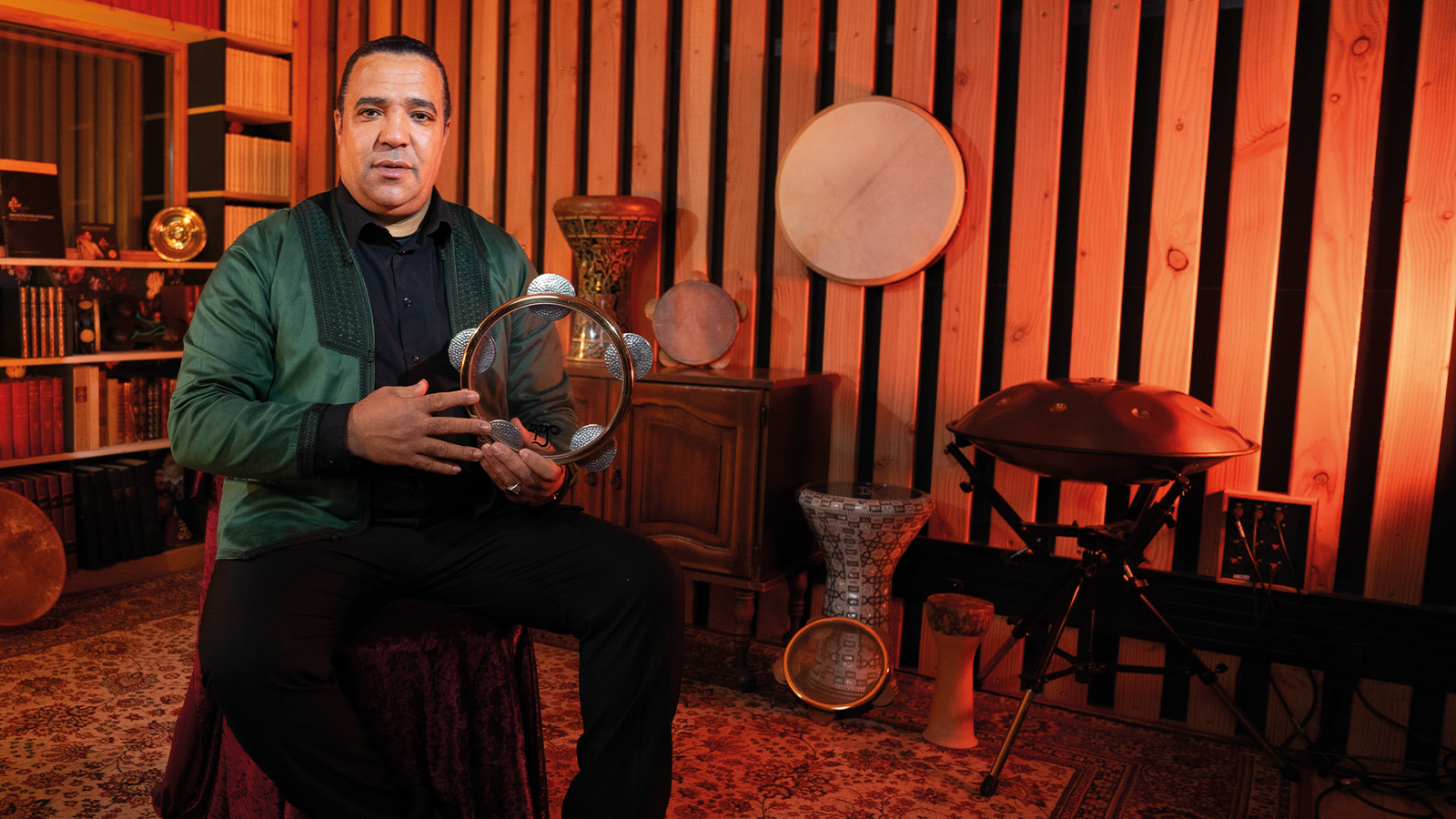
The course is taught by Ali Alaoui, a state-certified music teacher and specialist in Arabic percussion. His teaching goes beyond technique, helping you understand the musical role of the riqq, its place in traditional ensembles, and how to accompany singers and instrumentalists with precision and musicality.
Whether you’re looking for a beginner riqq course, a complete learning method, or advanced technical training, Melonea provides a structured pathway to help you achieve your goals.
What Is the Riqq?
The riqq is a traditional Middle Eastern tambourine widely used throughout the Arab world. It is one of the most important percussion instruments in Arabic classical music and is especially popular in Egypt, Lebanon, Syria, Iraq, Jordan, and many other countries across the Middle East and North Africa.
Recognizable by its wooden frame, drumhead, and pairs of metal jingles, the riqq combines rhythmic precision with remarkable musical expression. It is capable of producing deep bass tones, sharp accents, shimmering jingle sounds, and incredibly fast finger rolls.
Unlike many other tambourines, the riqq is considered a highly sophisticated instrument requiring excellent control, coordination, and sensitivity.
Within traditional Arabic orchestras, the riqq often serves as the rhythmic leader, maintaining a steady pulse while supporting the entire ensemble.
The King of Arabic Percussion
The riqq is often referred to as the king of Arabic percussion.
This title comes not from its volume, but from the exceptional level of technique and musical control required to play it.
A skilled riqq player must simultaneously control:
- drumhead strokes;
- the metal jingles;
- dynamics and accents;
- tempo stability;
- tone variations;
- fast finger rolls and ornaments.
Mastering all these elements makes the riqq one of the most demanding percussion instruments in Middle Eastern music.
The History of the Riqq
The riqq has a history dating back many centuries. Similar frame drums were already used in ancient Mesopotamia, Egypt, and the Levant.
Over time, the riqq evolved into one of the defining percussion instruments of Arabic classical music, becoming an essential member of the traditional Takht ensemble.
A Takht typically includes the oud, qanun, ney, violin, cello, and riqq.
Within this ensemble, the riqq provides rhythmic structure, supports melodic phrasing, and accompanies singers while remaining elegant and refined.
How Is a Riqq Made?
A traditional riqq consists of:
- a wooden frame;
- a natural or synthetic drumhead;
- multiple pairs of brass or metal jingles.
Modern riqqs often feature synthetic heads, which offer greater stability under changing temperatures and humidity. Traditional models typically use fish skin or goat skin, producing a warmer, more authentic sound but requiring more maintenance.
Most riqqs measure between 22 and 24 centimeters (8.5 to 9.5 inches) in diameter, making them lightweight and highly responsive.
The Role of the Jingles
The metal jingles are one of the riqq’s defining characteristics.
Rather than simply adding volume, they enrich the rhythm with bright, shimmering textures.
A riqq player controls the jingles in several ways:
- by gently shaking the instrument;
- through controlled wrist movements;
- by combining drumhead strokes with jingle sounds;
- by muting or allowing the jingles to resonate depending on the musical context.
Learning to control the jingles is one of the most challenging and rewarding aspects of playing the riqq.
The Fundamental Sounds of the Riqq
Like other Arabic percussion instruments, the riqq is built around several essential sounds that form the foundation of nearly every traditional rhythm.
Dom
Dom is the deep bass sound produced by striking the center of the drumhead. It forms the backbone of many Arabic rhythms.
Tik
Tik is a bright, high-pitched sound played near the edge of the drumhead. It provides clarity, articulation, and rhythmic accents.
Jingle Sounds
The metal jingles create sparkling metallic tones that complement the drumhead strokes. They can emphasize the pulse, add texture, or create dynamic contrast within a rhythm.
How to Hold the Riqq Properly
Correct posture is essential for developing good technique.
The riqq is generally held in one hand while the other performs the main strokes.
However, the supporting hand does much more than simply hold the instrument. It also controls the movement of the jingles, adjusts the instrument’s balance, and contributes to several advanced techniques.
Developing proper posture from the beginning will improve speed, comfort, precision, and overall musical control.
The First Techniques to Learn
Before exploring advanced rhythms, it is important to build solid technical foundations.
- Learn how to hold the riqq correctly.
- Develop a clean and consistent Dom.
- Master the Tik stroke.
- Control the jingles.
- Build a steady pulse.
- Practice slowly with a metronome.
- Begin working on basic finger rolls.
At Melonea, every exercise has been carefully designed to gradually improve your precision, coordination, timing, and musicality before introducing more advanced techniques.
Why Learn the Riqq?
The riqq is much more than a traditional tambourine. It is an instrument that develops precision, coordination, musicality, and rhythmic awareness. Although mastering it requires patience and dedication, learning the riqq opens the door to one of the richest musical traditions in the Middle East and North Africa.
Whether you are a percussionist, drummer, music student, or simply passionate about Arabic music, the riqq will expand your rhythmic vocabulary while giving you a deeper understanding of Middle Eastern musical traditions.
Develop Outstanding Rhythm Skills
The riqq is often regarded as one of the finest instruments for developing rhythmic precision.
Every stroke must be perfectly placed within the pulse. Unlike louder percussion instruments that can sometimes hide small timing errors, the riqq demands absolute accuracy. Even the slightest inconsistency becomes immediately noticeable.
Through Melonea’s progressive exercises, you will gradually learn to:
- maintain a perfectly steady tempo;
- develop a stronger internal pulse;
- play with greater precision and control;
- improve timing consistency;
- build confidence when performing with other musicians.
Improve Coordination and Finger Control
The riqq requires exceptional coordination between both hands.
One hand supports and balances the instrument while simultaneously controlling the movement of the jingles. The other performs the main strokes, finger rolls, accents, and rhythmic patterns.
This unique combination develops:
- hand independence;
- fine motor control;
- finger dexterity;
- precision of movement;
- overall coordination.
These skills naturally benefit musicians who play many other percussion instruments as well.
Discover the Rich World of Arabic Rhythms
The riqq accompanies nearly every major rhythm found in Arabic music.
Throughout your training, you will discover traditional rhythmic patterns such as:
- Maqsum (4/4)
- Baladi
- Malfuf (2/4)
- Ayoub
- Wahda
- Masmoudi
- Samai (10/8)
- as well as numerous traditional rhythms from North Africa, the Middle East, and the Gulf region.
Learning these rhythms involves much more than memorizing sequences of Dom and Tik. You will also understand their pulse, accents, musical function, and the role they play when accompanying singers and instrumentalists.
The Role of the Riqq in Arabic Music
The riqq occupies a unique place within Arabic music.
While the darbuka often provides powerful rhythmic accents, the riqq is responsible for maintaining the pulse, adding elegance, and supporting the entire ensemble with subtlety and precision.
Its refined sound makes it an ideal companion for singers as well as melodic instruments such as the oud, qanun, ney, violin, and cello.
The Riqq in Arabic Orchestras
In traditional Arabic orchestras, the riqq is frequently considered the rhythmic leader.
It can be heard accompanying many of the greatest artists in Arabic music history, including:
- Umm Kulthum;
- Mohammed Abdel Wahab;
- Abdel Halim Hafez;
- Farid Al Atrache;
- Fairuz;
- Sabah Fakhri;
- Warda;
- and many contemporary performers.
In these ensembles, the riqq keeps the rhythm stable, supports the singers, and guides the percussion section while allowing the melodies to remain at the forefront.
The Riqq in the Traditional Takht Ensemble
The Takht is the classical chamber ensemble of Arabic music.
It traditionally consists of:
- oud;
- qanun;
- ney;
- violin;
- cello;
- and riqq.
Within the Takht, the riqq does far more than simply keep time. It interacts continuously with the melodies, follows the phrasing of the soloists, supports improvisations, and contributes to the emotional expression of the performance.
An Instrument of Precision and Elegance
Unlike many percussion instruments, the riqq is not about playing loudly.
Its beauty lies in subtlety.
A skilled riqq player focuses on:
- clean sounds;
- perfect timing;
- balanced dynamics;
- controlled jingles;
- careful listening;
- musical expression.
Sometimes, playing fewer notes with excellent control creates a far greater musical impact than playing many notes without purpose.
Supporting the Music
One of the defining qualities of an accomplished riqq player is the ability to support the music rather than dominate it.
When accompanying an oud, qanun, ney, violin, or vocalist, the percussionist must enhance the performance without distracting from the melody.
For this reason, Melonea places great emphasis on musicality, listening skills, and tasteful accompaniment before focusing on speed or technical showmanship.
The Riqq in Modern Music
Although deeply rooted in Arabic classical music, the riqq has found its place in many contemporary genres.
Today it is frequently used in:
- modern Arabic pop music;
- world music;
- Mediterranean fusion;
- jazz;
- film soundtracks;
- experimental and contemporary compositions.
Its versatility allows musicians from many cultures to incorporate authentic Middle Eastern rhythms into modern musical projects.
Who Are These Riqq Lessons For?
Melonea’s online riqq course has been designed for musicians of every level.
- Complete beginners.
- Percussionists wishing to explore Arabic percussion.
- Darbuka players looking to expand their skills.
- Drummers seeking stronger rhythmic precision.
- Music students interested in Middle Eastern traditions.
- Professional musicians wanting to broaden their musical vocabulary.
No previous knowledge of music theory is required. Every lesson follows a logical progression, allowing you to develop your skills step by step.
A Challenging but Rewarding Instrument
The riqq is often considered one of the most demanding percussion instruments in Arabic music.
Its technical challenges require patience, consistency, and careful practice. However, every new technique mastered opens the door to richer musical expression and greater artistic freedom.
With regular practice and Melonea’s structured learning method, you will steadily improve your technique, coordination, listening skills, and understanding of Arabic rhythms while building the confidence needed to perform with other musicians.
Why Choose Melonea to Learn the Riqq Online?
There are countless free videos about the riqq available online. While they can be useful for discovering a rhythm or observing a particular technique, they rarely follow a logical learning path. As a result, many students struggle to know where to begin, which techniques to practice first, or how to measure their progress.
Melonea was created to offer something different: a complete, structured learning experience that guides you from your very first strokes to advanced playing techniques.
A Progressive and Structured Learning Method
Our riqq course follows a carefully designed progression.
You begin by learning how to hold the instrument correctly, produce clean sounds, and understand the fundamental techniques before moving on to Arabic rhythms, finger rolls, accompaniment, ornaments, and more advanced musical concepts.
Each lesson naturally prepares you for the next, allowing you to build solid technical foundations while avoiding the bad habits that often slow down long-term progress.
Learn from an Experienced Teacher
All lessons are taught by Ali Alaoui, a state-certified music teacher and specialist in Arabic percussion.
His teaching philosophy emphasizes musicality, sound quality, rhythmic precision, and proper technique before focusing on speed or flashy performances.
Rather than simply demonstrating exercises, he explains how the riqq functions within Arabic music and how professional percussionists approach accompaniment.
Designed for Complete Beginners
Many percussion methods assume that students already have previous musical experience.
Melonea takes a different approach.
Every concept is explained clearly and progressively, making the course accessible even if you have never played a percussion instrument before.
Exercises Designed for Long-Term Progress
Every exercise has a specific educational purpose.
Throughout the course, you will gradually develop:
- clean and balanced sounds;
- steady timing;
- strong rhythmic precision;
- hand coordination;
- jingle control;
- finger independence;
- overall musicality.
At Melonea, we believe that playing slowly and accurately leads to much faster progress than trying to play fast too soon.
Learn at Your Own Pace
One of the greatest advantages of online learning is flexibility.
You can replay each lesson as many times as necessary, pause the videos whenever needed, spend extra time on difficult exercises, or revisit previous chapters whenever you like.
Your learning schedule adapts to your lifestyle—not the other way around.
High-Quality Video Lessons
Video lessons allow you to observe every detail of the technique, including:
- hand position;
- finger movements;
- drumhead strokes;
- jingle control;
- finger rolls;
- rhythmic exercises.
You can carefully study each movement before practicing it on your own instrument.
Understand the Music, Not Just the Technique
At Melonea, our goal is not simply to teach hand movements.
We want you to understand how Arabic rhythms are constructed, why they sound the way they do, and how they interact with melodies, singers, and other percussion instruments.
This deeper understanding will help you become a more complete musician and give you the confidence to accompany other performers naturally.
Musicality Before Speed
The riqq is sometimes associated with spectacular technical performances.
While these demonstrations can be impressive, they represent only one aspect of the instrument.
In professional Arabic orchestras, the finest percussionists are those who know how to support the music, listen carefully, and enhance the performance without overpowering it.
This philosophy forms the foundation of every Melonea lesson.
Discover More Arabic Percussion Instruments
Your Melonea subscription includes much more than riqq lessons.
You will also gain access to courses covering:
- Darbuka;
- Bendir;
- Daff;
- Taarija;
- Tbal;
- Qraqeb.
Learning several Arabic percussion instruments gives you a broader understanding of how each one contributes to traditional ensembles throughout North Africa, the Middle East, and the Gulf region.
Explore Arabic Polyrhythms
Melonea also includes a unique course dedicated to Arabic polyrhythms.
You will discover how multiple percussion instruments perform complementary rhythmic patterns while sharing the same pulse.
Understanding these rhythmic interactions will significantly improve your listening skills and your ability to perform with other musicians.
One Subscription, Unlimited Access
A single Melonea subscription gives you unlimited access to every available course on the platform.
You can move freely between riqq, darbuka, bendir, daff, and the other percussion courses while exploring the incredible diversity of Arabic musical traditions.
All future courses added to the platform are also included for active subscribers.
How to Progress Faster on the Riqq
Consistent practice is the key to success.
Even short daily practice sessions often produce better results than occasional long sessions.
To improve efficiently, we recommend that you:
- practice slowly;
- use a metronome regularly;
- focus on sound quality before speed;
- repeat exercises consistently;
- record yourself to evaluate your timing;
- review the fundamentals frequently;
- practice along with musical accompaniments.
Accessible Anywhere in the World
Melonea’s online riqq course is available on your computer, tablet, and smartphone.
Whether you live in the United States, Canada, the United Kingdom, Australia, France, Morocco, or anywhere else, you can learn whenever and wherever it suits you.
This flexibility allows you to fit music naturally into your daily routine while benefiting from a complete and professional learning method.
Start Learning the Riqq Today
The riqq is one of the most refined and expressive percussion instruments in Arabic music. Although mastering it requires dedication, it rewards musicians with exceptional rhythmic precision, musical sensitivity, and artistic expression.
With Melonea’s progressive teaching method, you will develop strong technical foundations, improve your rhythmic accuracy, and learn how to perform authentic Middle Eastern rhythms with confidence and musicality.
Whether your goal is to discover a new percussion instrument, accompany an Arabic ensemble, or deepen your understanding of Middle Eastern music, Melonea provides everything you need to progress step by step.
Frequently Asked Questions About Our Online Riqq Course
Can I learn the riqq online?
Yes. With high-quality video lessons, you can clearly observe every movement, hand position, finger technique, and rhythm. A structured learning method allows you to progress step by step while practicing at your own pace.
Is this riqq course suitable for beginners?
Absolutely. The course starts from the very beginning, covering how to hold the instrument, produce the basic sounds, and play your first Arabic rhythms. No previous musical experience is required.
Do I need to read music to learn the riqq?
No. You do not need to know music theory or read sheet music. The lessons rely on clear demonstrations, progressive exercises, and practical explanations that make learning accessible to everyone.
Is the riqq difficult to learn?
The riqq is considered one of the most technically demanding percussion instruments in Arabic music. However, with consistent practice and a structured method, every technique becomes achievable. Patience and regular practice are the keys to success.
How long does it take to learn the riqq?
Your progress depends on your goals, previous musical experience, and practice routine. Most beginners can play simple Arabic rhythms after a few weeks, while mastering finger rolls and advanced techniques naturally requires more time.
How much should I practice each day?
Practicing for 15 to 30 minutes a day is often enough to make steady progress. Short, regular practice sessions usually produce better results than occasional long sessions.
Which riqq should I buy as a beginner?
Most beginners start with a riqq fitted with a synthetic drumhead because it is durable, stable, and less sensitive to humidity and temperature changes. Choosing an instrument with high-quality jingles is equally important.
What is the difference between a riqq and a tambourine?
The riqq belongs to the tambourine family but has been specifically developed for Arabic music. It features heavier jingles, a more sophisticated playing technique, and a much wider range of sounds and musical expression.
What is the difference between the riqq and the darbuka?
The darbuka is a goblet drum, while the riqq is a frame drum with metal jingles. Both instruments are frequently used together in Arabic ensembles. The darbuka often provides power and rhythmic accents, whereas the riqq contributes precision, elegance, and rhythmic stability.
Is the riqq used throughout the Arab world?
Yes. The riqq is widely used across the Middle East and North Africa, particularly in Egypt, Lebanon, Syria, Iraq, Jordan, Palestine, and many traditional Arabic orchestras.
Is the riqq only used in traditional Arabic music?
No. Although it is strongly associated with Arabic classical music, the riqq is also used in contemporary Arabic music, world music, jazz, Mediterranean fusion, film scores, and many modern musical productions.
Can I learn the riqq without a private teacher?
Yes. A well-structured online course allows you to learn effectively by watching demonstrations, repeating exercises, and progressing through each lesson at your own pace.
At what age can someone start learning the riqq?
The riqq can be learned by children using an appropriately sized instrument. Teenagers and adults can also begin learning at any age.
Is this course suitable for experienced percussionists?
Yes. Experienced musicians can use the course to improve their technique, discover authentic Arabic rhythms, refine their musicality, and expand their percussion vocabulary.
Can I watch the lessons on my phone or tablet?
Yes. Melonea’s online courses are available on computers, tablets, and smartphones, allowing you to practice wherever it is most convenient.
Can I access the course from anywhere in the world?
Yes. As long as you have an internet connection, you can access your lessons from anywhere.
Do I need to own a riqq before starting?
You can watch the introductory lessons without an instrument, but owning a riqq is strongly recommended so you can practice the exercises and develop proper technique.
How can I improve my speed?
Speed should always come after accuracy. Practice slowly with relaxed movements and clean sounds. As your technique becomes more natural, your speed will improve automatically.
How do I develop smooth finger rolls?
Finger rolls require patience and repetition. Begin practicing them very slowly while focusing on relaxation, consistency, and finger control before gradually increasing the tempo.
Why should I practice with a metronome?
A metronome helps you develop a steady pulse, improve your timing, and measure your progress objectively. It is one of the most effective practice tools for every percussionist.
Can the riqq be played as a solo instrument?
Yes. The riqq is capable of impressive solo performances thanks to its wide range of techniques. However, its primary role remains accompanying singers and ensembles within Arabic music.
Are future courses included in my subscription?
Yes. All new courses released on Melonea are included for active subscribers at no additional cost.
Does my subscription only include the riqq course?
No. Your Melonea subscription also gives you unlimited access to all available courses, including darbuka, bendir, daff, taarija, tbal, qraqeb, Arabic polyrhythms, Body Rhythm, and every future course added to the platform.
Start Learning the Riqq with Melonea Today
The riqq is one of the most iconic percussion instruments in Arabic music. Its refined sound, expressive techniques, and essential role in traditional orchestras have made it a cornerstone of Middle Eastern musical culture for centuries.
With Melonea’s online riqq lessons, you will progressively master the fundamental techniques, authentic Arabic rhythms, finger rolls, jingle control, and musical expression that define this remarkable instrument.
Whether you are a complete beginner or an experienced percussionist looking to expand your skills, our structured learning method will help you build strong technical foundations while developing confidence, precision, and musicality.
Join Melonea today and discover a modern, professional, and enjoyable way to learn the riqq online with expert guidance from a specialist in Arabic percussion.
Course Features
- Lectures 12
- Quiz 0
- Duration 52 weeks
- Skill level All levels
- Language English
- Students 4
- Assessments Yes
You May Like

BODY RHYTHM (ENG)
Learn Body Rhythm with a Step-by-Step Method Would you like to develop your sense of rhythm, improve your coordination, or discover a new way of...

HANDPAN (ENG)
Learn Handpan with a Step-by-Step Method Would you like to learn the Handpan, discover a unique musical instrument, or develop both your sense of rhythm...

POLYRHYTHMS
Discover the Polyrhythms of the Arab World Arab World polyrhythms represent one of the richest treasures of Middle Eastern and North African musical heritage. Passed...

DARBUKA (ENG)
Online Darbuka Lessons: Learn with a Step-by-Step Method Would you like to learn the darbuka online, discover the rhythms of the Arab world, or improve...

DAFF (ENG)
Learn the Daf Online with a Step-by-Step Method Would you like to learn the Daf online, discover the rhythms of Middle Eastern music, or improve...