
Curriculum
- 1 Section
- 3 Lessons
- 52 Weeks
Overview
Learn the Daf Online with a Step-by-Step Method
Would you like to learn the Daf online, discover the rhythms of Middle Eastern music, or improve your frame drum technique? Melonea offers a structured online Daf course designed for complete beginners as well as experienced percussionists looking to expand their musical skills.
Unlike random tutorial videos found on the internet, our lessons follow a logical progression. Each lesson builds on the previous one, allowing you to develop a solid rhythmic foundation, improve your technique, and gain a deeper understanding of the Daf’s role in traditional and contemporary music.
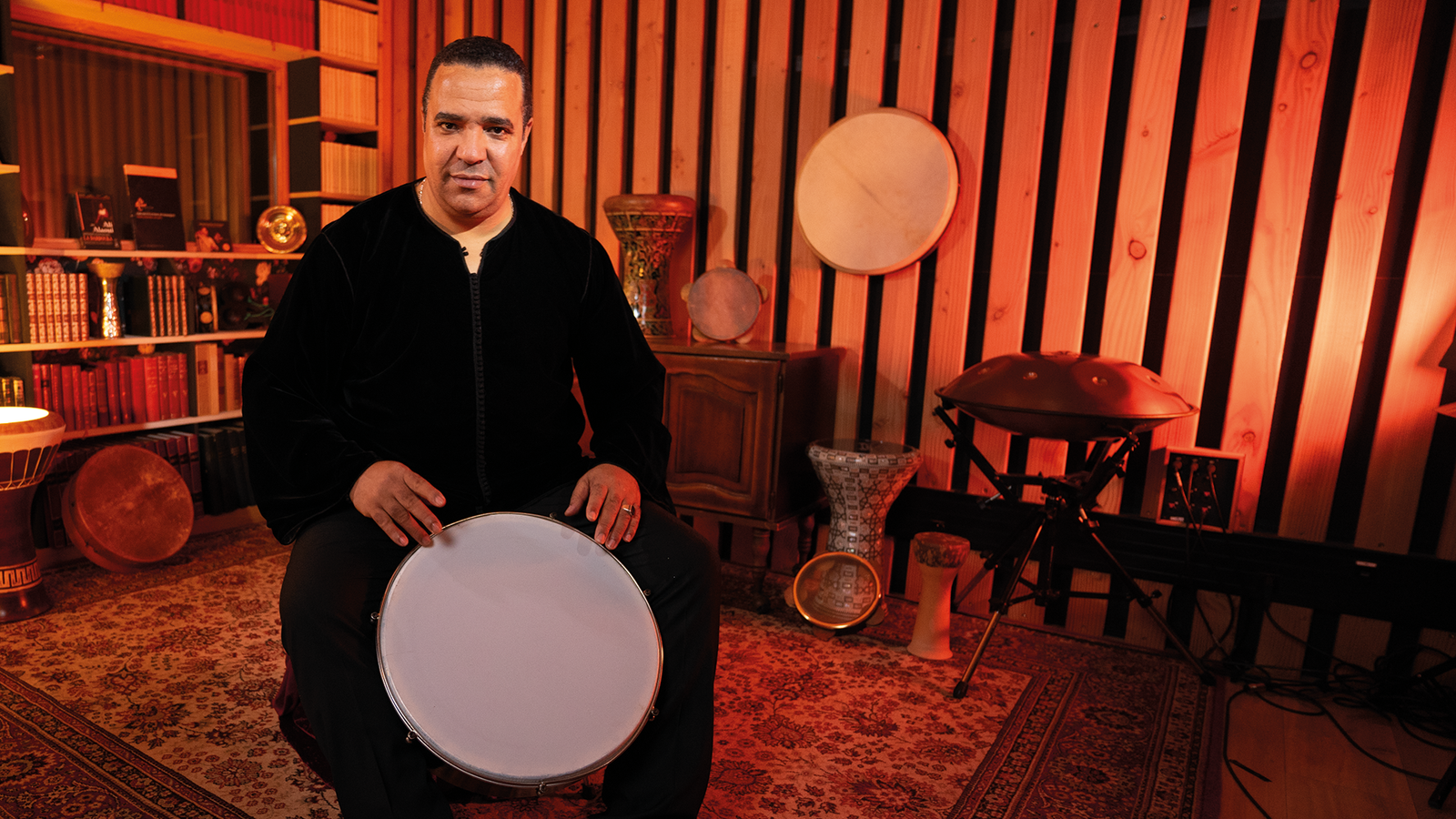
The course is taught by Ali Alaoui, a state-certified music teacher and specialist in Arabic and Middle Eastern percussion. His teaching philosophy is based on one essential principle: before playing fast or performing advanced techniques, every percussionist should first master posture, sound quality, rhythmic accuracy, and musicality.
Whether you are searching for online Daf lessons, a Daf course for beginners, or a complete method to improve your rhythm skills, Melonea provides a clear and progressive learning experience that you can follow at your own pace.
What is the Daf?
The Daf, sometimes spelled Daff, is a large frame drum belonging to one of the oldest families of percussion instruments in the world. It has been played for centuries throughout the Middle East, North Africa, and parts of Western Asia.
Its construction is simple yet incredibly expressive. A wooden circular frame supports a stretched drumhead that produces deep bass tones as well as bright, articulate sounds depending on where and how it is struck.
Although the instrument appears straightforward, the Daf offers remarkable musical possibilities. By combining different strokes, dynamics, and rhythmic patterns, percussionists can create rich accompaniments suitable for solo performances, traditional ensembles, and modern musical projects.
Today, the Daf is no longer limited to traditional music. It is increasingly used in world music, contemporary compositions, fusion projects, film scores, and educational programs dedicated to rhythm and percussion.
An Instrument with a Long Musical History
Frame drums have existed for thousands of years. Archaeological discoveries and ancient artwork show similar instruments being played throughout Mesopotamia, Persia, Egypt, and many surrounding civilizations.
Over the centuries, each culture developed its own construction techniques, playing styles, and rhythmic traditions. As a result, many different frame drums exist today, each with its own musical identity.
The Daf occupies an important place within numerous musical traditions. Depending on the region, it accompanies singers, supports instrumental ensembles, or provides the rhythmic foundation for traditional performances.
Despite its ancient origins, the Daf continues to evolve. Modern musicians regularly combine traditional techniques with contemporary musical styles, allowing this historic instrument to reach new audiences around the world.
How is a Daf Made?
The Daf consists of a large circular wooden frame covered by a single drumhead. Depending on the manufacturer and the intended use, the drumhead may be made from either natural animal skin or modern synthetic materials.
Natural skins generally produce a warm, organic sound appreciated by many traditional musicians. Synthetic drumheads offer greater stability and are less sensitive to changes in temperature and humidity, making them particularly suitable for regular practice and travel.
The diameter of the instrument also affects its sound. Larger frame drums tend to produce deeper bass frequencies, while slightly smaller models often respond more quickly and offer increased playing comfort.
The overall quality of the wood, the drumhead tension, and the balance of the instrument all contribute to both sound quality and playing comfort.
A Persian Version with Metal Rings
Some Dafs, particularly those used in Persian musical traditions, feature numerous small metal rings attached to the inside of the wooden frame. These rings vibrate when the instrument moves, producing an additional shimmering resonance.
This version has become especially popular in Iranian and Sufi music. However, the Melonea course focuses on the Daf without this specific playing technique, allowing students to concentrate on stroke quality, rhythm, timing, musical accompaniment, and solid technical foundations.
How Do You Play the Daf?
The Daf is usually held with one hand while the other performs the main strokes on the drumhead. In practice, however, both hands constantly work together to produce different sounds and maintain rhythmic balance.
Good posture plays a major role in learning the instrument. Holding the Daf correctly helps reduce fatigue while improving accuracy, relaxation, and consistency.
Learning always begins with the fundamentals: holding the instrument comfortably, producing clean sounds, and maintaining a steady pulse. Once these essential skills have been mastered, more advanced rhythms become much easier to learn.
The Fundamental Daf Sounds
Like many Arabic percussion instruments, the Daf is built around a small number of fundamental strokes that serve as the foundation for every rhythm.
- Dom: a deep bass sound produced near the center of the drumhead.
- Tik: a higher-pitched sound played closer to the edge.
- Open strokes: allowing the drumhead to resonate naturally.
- Muted strokes: creating shorter, more controlled sounds.
Great Daf playing is not about hitting harder or playing faster. It is about producing clean sounds, maintaining perfect timing, and controlling every stroke with precision.
For this reason, the first lessons on Melonea focus on developing sound quality, relaxation, rhythmic consistency, and proper technique before introducing more advanced rhythmic patterns.
Daf or Daff: Which Spelling is Correct?
Both spellings are correct.
The word Daf is commonly used in English-speaking countries as well as in Persian transliterations, while Daff is also found in French and other languages.
They both refer to the same musical instrument. This is why people may search for terms such as Learn Daf Online, Online Daff Course, Daf Lessons, or Frame Drum Lessons.
Throughout Melonea, we primarily use the spelling Daf, while recognizing that both spellings are widely accepted and used by musicians around the world.
Why Learn the Daf?
Learning the Daf is about much more than simply discovering a new percussion instrument. It helps develop a strong sense of rhythm, improves coordination, and teaches you how percussion supports and enhances music.
Because the Daf is played directly with the hands, every stroke is connected to the pulse. From the very first lessons, students learn how to maintain a steady tempo, place accents correctly, and accompany other musicians with confidence.
This makes the Daf an excellent instrument for complete beginners as well as experienced percussionists looking to broaden their musical vocabulary.
The skills developed while learning the Daf can also benefit musicians who play the Oud, Qanun, Ney, Darbouka, Riqq, Bendir, or virtually any other instrument. A stronger understanding of rhythm naturally improves timing, listening skills, and overall musical expression.
Developing a Steady Pulse
The most important quality of any percussionist is consistency.
A simple rhythm performed with excellent timing will always sound more musical than a complex rhythm played without control.
For this reason, Melonea’s Daf course places great emphasis on pulse, tempo, and rhythmic accuracy. Every exercise has been carefully designed to strengthen these essential skills before introducing more advanced techniques.
Improving Coordination
Playing the Daf requires both hands to work together naturally.
As students progress through the lessons, they gradually improve hand coordination, movement control, and rhythmic precision. These skills become increasingly valuable not only for Daf playing but for every percussion instrument.
With regular practice, movements become smoother, more relaxed, and more efficient.
Becoming a Better Musician
Good percussion is not simply about producing sounds. It is about listening.
A skilled percussionist constantly pays attention to the singer, the melody, the other musicians, and the overall dynamics of the performance.
Knowing when not to play is often just as important as knowing what to play.
This philosophy is central to the Melonea teaching method. Rather than focusing on flashy demonstrations, the course emphasizes musicality, balance, and supporting the music as a whole.
A Progressive Learning Method
There are thousands of Daf videos available online, but beginners often struggle because they don’t know where to start.
Some tutorials introduce advanced techniques immediately, while others explain individual rhythms without teaching the fundamentals required to play them correctly.
Melonea follows a completely different approach.
Each lesson has been carefully organized to guide students step by step. Every new concept builds upon previously acquired skills, creating a natural and enjoyable learning experience.
Master the Basics First
Before learning variations, fills, or advanced rhythmic ideas, students first learn to master the main rhythm.
This allows them to fully understand the structure of each rhythm before adding ornamentation or personal interpretation.
Building solid foundations makes long-term progress much easier and prevents common technical mistakes.
Learn at Your Own Pace
All lessons are available online, allowing you to practice whenever it suits your schedule.
You can pause the videos, replay demonstrations as many times as necessary, and spend as much time as you need on each lesson before moving forward.
This flexibility makes online learning particularly effective for students who cannot attend weekly in-person classes.
Technique in the Service of Music
At Melonea, technical ability is never considered the final goal.
Technique should always serve the music. A beautiful sound, consistent timing, and expressive playing are far more valuable than speed alone.
This musical philosophy guides every lesson taught by Ali Alaoui throughout the course.
What Is the Difference Between the Daf and the Bendir?
The Daf and the Bendir both belong to the frame drum family, but each instrument has developed its own musical identity.
The Bendir is strongly associated with North African music, particularly the traditions of Morocco, Algeria, and Tunisia. It is widely used in folk music, spiritual music, and traditional ceremonies.
The Daf is more commonly found throughout the Middle East and Western Asia. Although the instruments may look similar, they differ in repertoire, playing traditions, and musical function depending on the culture.
Both instruments deserve their own dedicated learning approach, and each offers unique rhythmic possibilities.
What Is the Difference Between the Daf and the Riqq?
The Riqq is another member of the frame drum family, but it is much smaller and features pairs of metal jingles mounted around its frame.
It plays a central role in Arabic classical music and allows extremely detailed finger techniques and delicate rhythmic ornamentation.
The Daf, by contrast, produces a broader, deeper sound and often serves as a powerful rhythmic foundation within an ensemble.
Many percussionists choose to study both instruments because they complement each other beautifully while developing different technical skills.
Why Choose Melonea to Learn the Daf Online?
Melonea is an online learning platform entirely dedicated to world music and traditional percussion.
Rather than offering isolated tutorials, Melonea provides structured educational programs built around progressive learning and solid musical foundations.
The Daf course is part of a complete percussion program designed to help students understand the richness of Arabic and Middle Eastern rhythms.
Your subscription also includes unlimited access to courses covering Darbouka, Bendir, Riqq, Taarija, Tbal, Qraqeb, Body Rhythm, Handpan, and exclusive lessons on Arabic polyrhythms from the Middle East, the Gulf countries, and North Africa.
Learn from an Experienced Teacher
The course is taught by Ali Alaoui, a state-certified music teacher and internationally recognized specialist in Arabic percussion.
His experience teaching students of all levels has led him to develop a method that combines technical precision with genuine musical understanding.
His goal is not only to teach rhythms but also to help students become confident, expressive musicians.
A Structured Course from Beginning to Advanced
The course follows a logical progression from the very first lesson.
You begin by learning proper posture, fundamental strokes, and rhythmic stability before gradually moving on to more advanced patterns and musical applications.
This structured approach makes learning more enjoyable and significantly more effective than watching random online tutorials.
How to Start Learning the Daf Successfully
Learning the Daf is all about consistency rather than speed. You do not need to practice for several hours every day to make progress. Short practice sessions of fifteen to thirty minutes, repeated several times a week, are enough to develop solid rhythmic skills over time.
During the first weeks of practice, your main objective should not be to play fast. Instead, focus on producing clean sounds, maintaining a steady tempo, and developing relaxed, natural movements. These strong foundations will make every future rhythm much easier to learn.
Choose the Right Instrument
Beginners should select a Daf that feels comfortable to hold and is well balanced. A good-quality instrument makes learning more enjoyable while helping produce cleaner, more consistent sounds.
Whether you choose a natural skin or a synthetic drumhead depends largely on your personal preferences. Natural skins generally produce a warmer and more organic tone, while synthetic heads offer greater stability and require less maintenance when exposed to changes in temperature or humidity.
The most important factor is choosing an instrument that encourages regular practice and feels comfortable during long playing sessions.
Practice Slowly
One of the most common mistakes beginners make is trying to play too fast.
Speed develops naturally through repetition. By practicing slowly, you give yourself time to control every movement, improve your timing, and produce a clean, balanced sound.
Once each rhythm feels comfortable, you can gradually increase the tempo without sacrificing accuracy or musicality.
Practice with a Metronome
A metronome is one of the most valuable practice tools for any percussionist.
It helps develop a steady pulse, prevents unwanted tempo fluctuations, and improves overall rhythmic precision.
As your internal sense of timing becomes stronger, playing with other musicians becomes significantly easier and more enjoyable.
Focus on Quality Rather Than Quantity
A focused twenty-minute practice session is usually far more productive than several hours of distracted playing.
Listen carefully to every stroke, stay relaxed, and pay close attention to sound quality rather than simply repeating movements mechanically.
The Daf rewards precision, patience, and consistency much more than speed.
Why Learn the Daf Online?
Online learning has transformed the way musicians study percussion.
Instead of adapting your schedule to weekly lessons, you can learn whenever it is most convenient for you. Every lesson remains available, allowing you to pause, replay, and review each demonstration as often as necessary.
This flexibility is particularly valuable for students who do not have access to a qualified Daf teacher in their local area.
Video lessons also make it easy to observe hand positions, movements, posture, and rhythmic demonstrations in great detail, something that is often difficult during group classes.
Frequently Asked Questions
Can I learn the Daf with no musical experience?
Absolutely. The Melonea Daf course has been designed for complete beginners. Every concept is introduced progressively, allowing students to build confidence step by step without requiring any previous musical background.
Do I need to read music?
No. Reading standard music notation is not required to begin learning the Daf. The course gradually introduces rhythmic concepts using clear demonstrations and practical exercises.
How long does it take to learn the Daf?
The answer depends on your practice routine and personal goals. Most students can perform basic rhythms confidently after several weeks of regular practice. Like any musical instrument, mastering the Daf is a long-term journey that continues to reward dedicated practice.
Is there a difference between Daf and Daff?
No. Both spellings refer to the same instrument. “Daf” is more common in English-speaking countries, while “Daff” is also widely used in French and other languages.
Can adults learn the Daf?
Of course. There is no age limit for learning percussion. Many students discover the Daf later in life, either as their first instrument or after years of playing another instrument.
Is the Daf difficult to learn?
The first rhythms are relatively easy to understand. The real challenge lies in developing steady timing, clean technique, and musical consistency. A structured learning method makes this process much more enjoyable and efficient.
Can I learn using only the online videos?
Yes. The course has been specifically designed for independent online learning. Every lesson can be watched as many times as necessary, allowing you to progress at your own pace.
Can I watch the lessons on my phone or tablet?
Yes. Melonea courses are fully accessible on computers, tablets, and smartphones with an internet connection, allowing you to practice wherever you are.
Does the subscription include only the Daf course?
No. Your subscription gives you unlimited access to the complete Melonea library, including Darbouka, Bendir, Riqq, Taarija, Tbal, Qraqeb, Body Rhythm, Handpan, and exclusive Arabic polyrhythm courses.
Start Learning the Daf Today
The Daf is an expressive and versatile frame drum that occupies an important place in the musical traditions of the Middle East and the Arab world. Learning this instrument develops rhythm, coordination, listening skills, and musical sensitivity while opening the door to a rich and fascinating cultural heritage.
With Melonea’s online Daf course, you benefit from a carefully structured learning method that guides you from your very first strokes to increasingly advanced rhythms, always at your own pace.
Under the guidance of Ali Alaoui, a state-certified music teacher and internationally recognized percussion specialist, you will build strong technical foundations while developing the musical skills needed to accompany singers, instrumentalists, and traditional ensembles with confidence.
Join Melonea today and discover a complete, modern, and progressive way to learn the Daf online while gaining unlimited access to an entire world of Arabic and Middle Eastern percussion.
Course Features
- Lectures 3
- Quiz 0
- Duration 52 weeks
- Skill level All levels
- Language English
- Students 4
- Assessments Yes
You May Like

BODY RHYTHM (ENG)
Learn Body Rhythm with a Step-by-Step Method Would you like to develop your sense of rhythm, improve your coordination, or discover a new way of...

HANDPAN (ENG)
Learn Handpan with a Step-by-Step Method Would you like to learn the Handpan, discover a unique musical instrument, or develop both your sense of rhythm...

POLYRHYTHMS
Discover the Polyrhythms of the Arab World Arab World polyrhythms represent one of the richest treasures of Middle Eastern and North African musical heritage. Passed...

DARBUKA (ENG)
Online Darbuka Lessons: Learn with a Step-by-Step Method Would you like to learn the darbuka online, discover the rhythms of the Arab world, or improve...

RIQQ (ENG)
Learn the Riqq Online with a Step-by-Step Method Would you like to learn the riqq online, discover the rhythms of Arabic music, or improve your...