
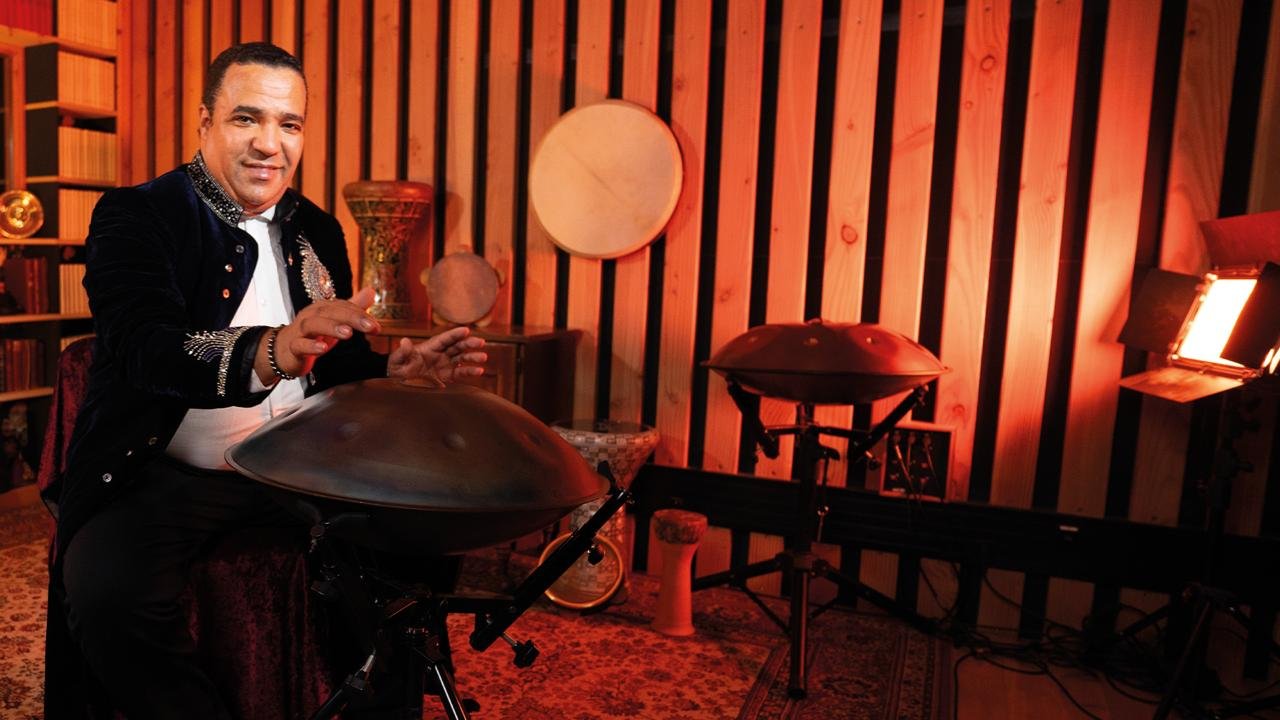

Curriculum
- 1 Section
- 4 Lessons
- 52 Weeks
Overview
Learn Handpan with a Step-by-Step Method
Would you like to learn the Handpan, discover a unique musical instrument, or develop both your sense of rhythm and melody? The Handpan is a fascinating melodic percussion instrument that has become increasingly popular among musicians all over the world. Its warm, soothing, and expressive sound makes it accessible to complete beginners while offering endless possibilities for experienced musicians.
With Melonea’s online Handpan course, you will progress step by step through a clear and structured learning method. You will not only learn how to play rhythms, but also how to create beautiful melodies and develop your own musical style.
Unlike many free tutorials available online, our course follows a true educational progression. Every lesson prepares you for the next one, allowing you to gradually improve your technique, musicality, and improvisation skills.
What Is the Handpan?
The Handpan is a melodic percussion instrument made of steel and played entirely with the hands. Each tone field produces a specific musical note, allowing players to perform both rhythms and melodies on a single instrument.
Its distinctive shape consists of two steel shells joined together, while its unique sound combines elements reminiscent of steel drums, bells, and traditional percussion instruments from various cultures.
Unlike most percussion instruments, the Handpan offers rich harmonic possibilities. It allows musicians to combine rhythm, melody, and harmony naturally within the same performance.
This exceptional versatility explains why the Handpan has become popular among performers, composers, street musicians, and anyone looking for an expressive and relaxing musical instrument.
The History of the Handpan
The Handpan is a relatively modern instrument. It first appeared in Switzerland in the early 2000s and was inspired by the Trinidad Steel Pan as well as several traditional percussion instruments from around the world.
Since its creation, the Handpan has gained worldwide recognition. Today it is used in many musical genres, including world music, meditation music, jazz, contemporary music, film scores, and free improvisation.
Each manufacturer develops its own scales and tunings, offering musicians a wide variety of tonal colors and musical possibilities.
Why Learn the Handpan?
The Handpan is often considered one of the most accessible instruments for beginners.
Thanks to its carefully designed tuning, it is possible to produce harmonious sounds almost immediately without extensive knowledge of music theory.
However, this simplicity should not be confused with limitation. The Handpan offers incredible musical depth and can accompany musicians throughout their entire musical journey.
Learning the Handpan allows you to:
- develop your sense of rhythm;
- improve coordination between both hands;
- develop your musical ear;
- increase concentration;
- play melodies and rhythmic accompaniment;
- stimulate creativity;
- learn improvisation;
- enjoy a relaxing musical experience.
Is the Handpan Difficult to Learn?
The Handpan is generally considered an easy instrument to begin learning.
From the very first lessons, beginners can produce beautiful sounds and perform simple rhythmic patterns.
Like every musical instrument, however, true progress requires structured learning and regular practice.
Developing precise hand movements, a refined touch, rhythmic accuracy, melodic phrasing, and improvisation skills all come with time and proper guidance.
This is why following a progressive learning method is far more effective than simply copying random videos found online.
Why Is the Handpan So Popular?
The Handpan produces a sound unlike any other instrument.
Its rich overtones create a warm, deep, and calming atmosphere that immediately captures the listener’s attention.
This unique sound explains why the Handpan is appreciated not only by musicians but also by people practicing meditation, yoga, mindfulness, and relaxation.
Beyond its calming qualities, however, the Handpan is above all a genuine musical instrument that encourages creativity, artistic expression, and musical sensitivity.
A Rhythmic and Melodic Instrument
One of the Handpan’s greatest strengths is its ability to combine two essential aspects of music.
On one hand, it develops rhythm through hand percussion techniques.
On the other, every tone field produces a specific musical note that allows players to create melodies, accompaniment patterns, and complete musical compositions.
This unique combination of percussion and melody makes the Handpan one of the most versatile instruments available today.
In the Melonea course, both aspects are developed progressively, helping students build a balanced and complete musical approach.
The Benefits of Playing the Handpan
Regular Handpan practice provides numerous musical and personal benefits.
- Improves coordination;
- Strengthens memory;
- Develops concentration;
- Enhances musical listening skills;
- Stimulates creativity;
- Reduces stress;
- Improves rhythmic precision;
- Develops musical expression and sensitivity.
For these reasons, the Handpan is appreciated both as a professional musical instrument and as a relaxing artistic activity.
A Learning Method Designed for Beginners
At Melonea, we have created a structured learning path that allows every student to progress confidently.
You begin by discovering the instrument, understanding how it works, and learning the proper playing techniques.
The course then gradually introduces rhythm, melodic development, and improvisation.
Each new lesson builds upon previously acquired skills, allowing you to establish strong and lasting musical foundations.
This progressive approach will help you gain confidence quickly while developing genuine musicality and expressive playing.
Develop Your Sense of Rhythm on the Handpan
Before playing complex melodies, it is essential to build a strong rhythmic foundation.
Rhythm is the driving force behind every piece of music. Even the most beautiful melodies lose their impact if they are not supported by a steady pulse.
For this reason, the first part of the Melonea course focuses on rhythm training.
You will gradually learn how to feel the pulse, maintain a consistent tempo, and naturally coordinate both hands.
These skills will quickly become second nature, allowing you to play with greater confidence, precision, and musical expression.
The Pulse: The Heart of Music
Every style of music is built upon a steady pulse.
The pulse is the regular beat you naturally feel when listening to music.
On the Handpan, maintaining a stable pulse is essential for creating pleasant and expressive performances.
Beginners often speed up unconsciously or slow down when a passage becomes more challenging.
Through progressive exercises, you will learn to keep a steady tempo regardless of the technical difficulty.
Developing Two-Hand Coordination
The Handpan is played entirely with your hands.
Both hands must gradually learn to work together while remaining independent.
At the beginning of the course, the exercises are intentionally simple, allowing you to develop relaxed and natural movements.
As you progress, each hand gradually takes on a different musical role. One hand may maintain the rhythmic pulse while the other performs melodic phrases or rhythmic accents.
This independence is one of the most valuable skills every Handpan player should develop.
The Importance of Touch
The Handpan is an extremely sensitive instrument.
Unlike a traditional drum, success does not depend on striking hard but on producing clean, controlled, and resonant notes.
Your touch has a direct impact on the beauty and richness of the instrument’s sound.
Relaxed and precise movements allow each note to resonate naturally while preserving the instrument’s harmonic qualities.
Throughout the course, you will learn how to refine your touch and fully explore the Handpan’s remarkable sound.
Building Rhythmic Melodies
One of the Handpan’s most fascinating characteristics is its ability to combine rhythm and melody simultaneously.
These two musical elements constantly support one another.
A melody becomes far more expressive when supported by a strong rhythmic foundation.
Likewise, rhythm becomes much more engaging when it highlights the instrument’s beautiful notes.
During this part of the course, you will discover how to naturally combine rhythm and melody to create flowing, expressive musical phrases.
Understanding Rhythmic Melody
A rhythmic melody is a sequence of musical notes organized within a rhythmic structure.
Each note has its own duration, position within the measure, and musical purpose.
Learning to control these elements allows you to build increasingly rich and expressive musical phrases.
The Melonea exercises gradually develop these skills without requiring advanced knowledge of music theory.
Developing Your Musical Ear
Playing the Handpan is about much more than simply striking notes.
It is equally important to listen carefully to the instrument’s natural resonance.
Every note continues vibrating for several seconds after it is played.
Understanding these natural overtones helps you choose the perfect moment to play the next note and prevents your music from becoming overcrowded.
This attentive listening gradually develops a deeper sense of musical expression.
Musicality Before Speed
Many beginners want to play fast as soon as possible.
However, speed should always be the result of good technique—not the primary objective.
A slow, expressive, and well-controlled performance will always sound better than a fast but inaccurate one.
For this reason, the Melonea method places musicality above technical performance.
By practicing slowly, every movement becomes more relaxed, every note resonates more fully, and your confidence naturally increases.
Developing Musical Expression
The Handpan is often described as one of the most expressive percussion instruments.
Beyond technique, it allows musicians to communicate emotions through dynamics, silence, touch, and phrasing.
As you progress through the course, you will learn how to vary your touch, dynamics, and interpretation to bring greater emotion and personality to your playing.
This expressive dimension is one of the Handpan’s greatest strengths.
Preparing for Improvisation
Before improvising freely, it is important to master the fundamentals of rhythm and melody.
Improvisation is not about playing random notes.
It is based on a solid understanding of your instrument, careful listening, rhythmic stability, and musical confidence.
The exercises in this section gradually prepare you for this exciting stage of your musical development.
You will develop the skills needed to create your own musical ideas naturally and confidently.
A Progressive Method Designed for Long-Term Growth
Every lesson in the Melonea Handpan course has been carefully designed to build lasting musical foundations.
The exercises gradually become more complete while remaining easy to follow.
You progress step by step without skipping essential stages, allowing for better retention and long-term improvement.
This structured approach will help you develop not only solid technique, but also a deep musical understanding that will support your Handpan playing for years to come.
Why Choose Melonea to Learn the Handpan?
Today, thousands of Handpan videos are available online.
While they can be inspiring, they rarely provide the structure needed to build solid musical foundations.
Learning the Handpan is not simply about copying songs. It requires understanding rhythm, melody, touch, timing, and the musical principles that allow you to play with confidence and expression.
That is exactly what the Melonea method is designed to teach.
Every lesson follows a logical progression, guiding you step by step from discovering the instrument to developing your own improvisation skills.
You will gradually improve your technique, musical ear, coordination, creativity, and overall musicianship.
Learn at Your Own Pace
All lessons are available online 24/7 and can be accessed from your computer, tablet, or smartphone.
You can watch every lesson as many times as you need and practice whenever it fits your schedule.
This flexibility allows you to learn without pressure and progress at your own pace.
Whether you practice a few minutes each day or several hours a week, the course adapts perfectly to your availability.
A Method Focused on Musicality
At Melonea, our goal goes beyond teaching technical exercises.
We want to help you become a complete musician.
You will learn how to build balanced rhythms, create expressive melodies, and use silence effectively to bring more emotion to your music.
This approach helps you truly understand the Handpan rather than simply memorizing songs.
Learn to Improvise
For many musicians, improvisation is one of the most rewarding aspects of playing the Handpan.
Contrary to popular belief, improvisation is not about playing random notes.
Good improvisation is built upon a steady pulse, a solid understanding of your instrument, careful listening, and the confidence to express your own musical ideas.
Throughout this course, you will progressively develop these essential skills.
Over time, you will gain the confidence to create your own musical phrases and develop your own artistic voice.
Who Is This Course For?
The Melonea Handpan course has been designed for musicians of all levels.
It is ideal for:
- complete beginners discovering the Handpan;
- musicians looking to learn a new instrument;
- percussionists who want to develop melodic playing;
- pianists, guitarists, singers, and other instrumentalists wishing to expand their musical skills;
- people looking for a relaxing and creative musical activity;
- anyone who wants to improve their sense of rhythm and melody.
No previous musical training or music theory knowledge is required to start learning.
The Benefits of Learning the Handpan
Regular Handpan practice offers numerous musical and personal benefits.
- Improves coordination;
- Develops concentration;
- Strengthens memory;
- Enhances listening skills;
- Stimulates creativity;
- Reduces stress;
- Improves rhythmic precision;
- Builds musical confidence.
For these reasons, the Handpan is appreciated not only as a performance instrument but also as a powerful tool for relaxation, creativity, and personal expression.
Frequently Asked Questions
Is the Handpan suitable for beginners?
Absolutely. Thanks to its unique tuning system, beginners can quickly produce beautiful, harmonious sounds even without previous musical experience.
Do I need to know music theory?
No. The course focuses primarily on listening, practical playing, rhythm, and musical understanding rather than theoretical knowledge.
How often should I practice?
Practicing for 15 to 20 minutes several times a week is enough to make steady and noticeable progress.
Is the Handpan only used for meditation music?
Not at all. Although its sound is often associated with relaxation and meditation, the Handpan is a versatile musical instrument that can be used in world music, jazz, contemporary music, live performance, composition, and many other musical styles.
Can I learn by myself with online lessons?
Yes. The Melonea method has been specifically designed to guide students through a progressive learning path that makes independent learning both effective and enjoyable.
Can I watch the lessons on my phone or tablet?
Yes. Every lesson is fully accessible on computers, tablets, and smartphones.
How long do I have access to the courses?
You enjoy unlimited access to all available courses for as long as your subscription remains active.
Does my subscription include only the Handpan course?
No.
Your Melonea subscription gives you unlimited access to every available course on the platform, including Darbuka, Bendir, Riqq, Daff, Qraqeb, Taarija, and Tbal, as well as Body Rhythm, Arab World Polyrhythms, and all future courses that will be added to the platform.
Start Your Handpan Journey Today
The Handpan is a remarkable musical instrument that naturally combines rhythm, melody, harmony, and artistic expression.
Its intuitive playing style allows beginners to create beautiful music quickly while offering experienced musicians endless creative possibilities.
With Melonea’s progressive learning method, you will steadily improve your technique, rhythmic accuracy, musicality, and improvisation skills.
Whether you want to discover a new instrument, expand your musical abilities, or simply enjoy making music, this complete online Handpan course will support your progress every step of the way.
Join Melonea today and discover a structured, inspiring, and enjoyable way to learn the Handpan online while developing your creativity and expressing your own unique musical voice.
Course Features
- Lectures 4
- Quiz 0
- Duration 52 weeks
- Skill level All levels
- Language Français
- Students 4
- Assessments Yes
You May Like

BODY RHYTHM (ENG)
Learn Body Rhythm with a Step-by-Step Method Would you like to develop your sense of rhythm, improve your coordination, or discover a new way of...

POLYRHYTHMS
Discover the Polyrhythms of the Arab World Arab World polyrhythms represent one of the richest treasures of Middle Eastern and North African musical heritage. Passed...

DARBUKA (ENG)
Online Darbuka Lessons: Learn with a Step-by-Step Method Would you like to learn the darbuka online, discover the rhythms of the Arab world, or improve...

RIQQ (ENG)
Learn the Riqq Online with a Step-by-Step Method Would you like to learn the riqq online, discover the rhythms of Arabic music, or improve your...

DAFF (ENG)
Learn the Daf Online with a Step-by-Step Method Would you like to learn the Daf online, discover the rhythms of Middle Eastern music, or improve...