

Curriculum
- 1 Section
- 6 Lessons
- 52 Weeks
Overview
Learn Body Rhythm with a Step-by-Step Method
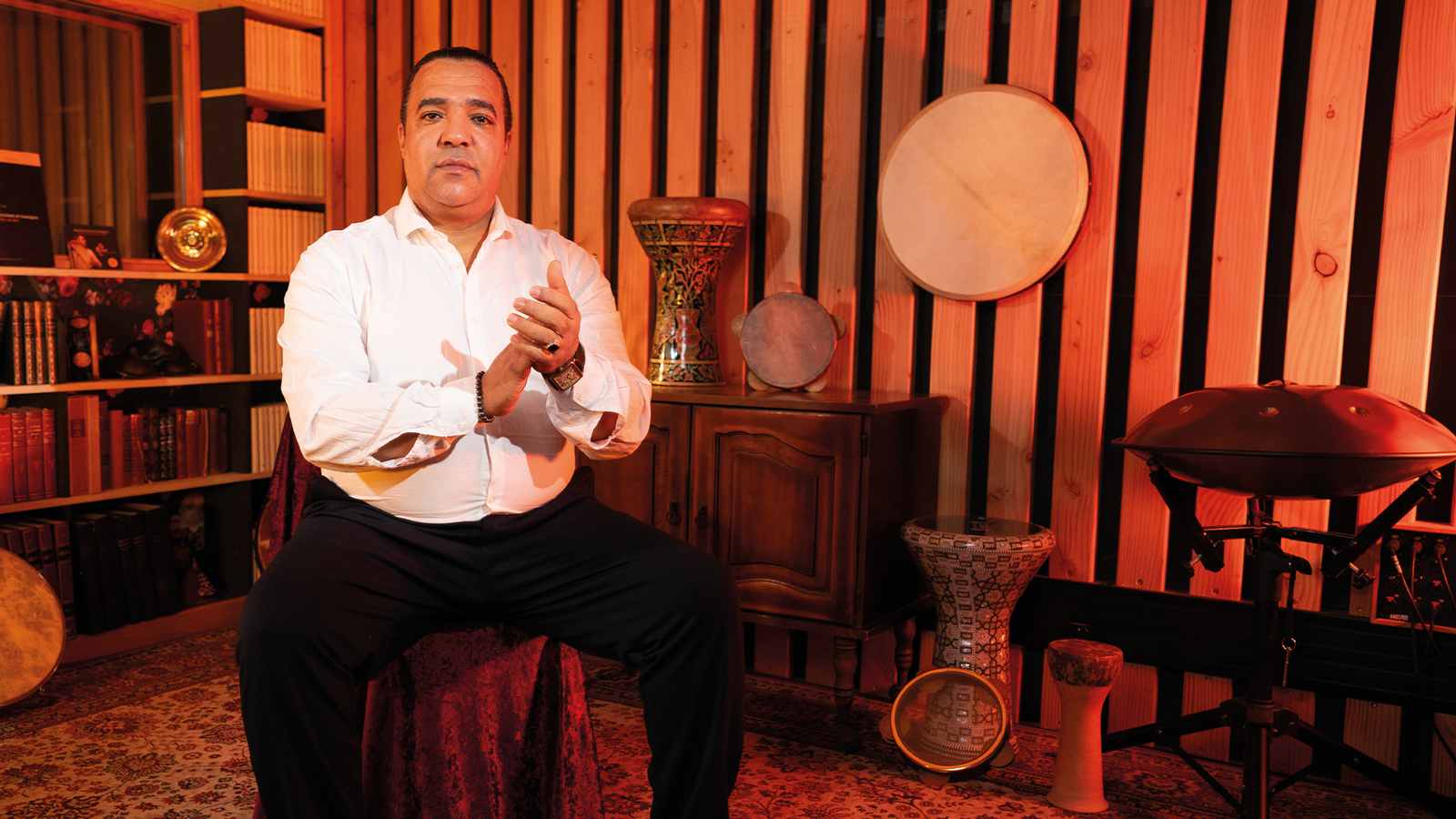
Would you like to develop your sense of rhythm, improve your coordination, or discover a new way of making music without an instrument? Body Rhythm, also known as Body Percussion, uses the human body as a real percussion instrument.
By clapping your hands, striking your thighs, chest, feet, or other parts of your body, you can create a wide variety of sounds and rhythms. Accessible to everyone, Body Rhythm helps you build strong musical foundations while improving coordination, concentration, and listening skills.
With Melonea’s online Body Rhythm course, you’ll progress step by step through a clear and structured learning method. The lessons are designed for complete beginners as well as musicians who want to strengthen their rhythmic skills.
Unlike many free videos available online, the course follows a true educational progression. Every exercise prepares you for the next one, helping you develop solid rhythmic foundations and excellent timing.
What is Body Rhythm?
Body Rhythm is the art of creating rhythms using only your own body. Your hands, feet, chest, thighs, and fingers become percussion instruments capable of producing a wide range of sounds.
This practice is now found in many musical styles around the world, but it has existed for centuries in different cultures. Long before percussion instruments were created, the human body was probably the first and most natural way to accompany songs and dances.
Body Rhythm is much more than simply clapping your hands. It develops a deep understanding of rhythm by combining body movement, listening skills, and precise coordination.
Every movement has a musical purpose. Some sounds mark the pulse, others emphasize accents or offbeats. The goal is to understand how rhythms are built rather than simply memorizing impressive movements.
Why Learn Body Rhythm?
Body Rhythm is much more than a fun musical activity. It is one of the most effective ways to develop the essential foundations of rhythm and music.
By using your own body, you physically experience the pulse, strong beats, subdivisions, and rhythmic structures.
Learning Body Rhythm allows you to:
- develop a strong sense of rhythm;
- improve coordination between different parts of your body;
- build independence between your hands and feet;
- better understand tempo and musical meter;
- improve rhythmic accuracy;
- increase concentration;
- develop your listening skills.
These abilities are valuable for every musician, whether you play drums, piano, guitar, darbuka, bendir, sing, or perform on any other instrument.
Is Body Rhythm Only for Percussionists?
Absolutely not.
Body Rhythm is suitable for anyone who wants to improve their sense of rhythm, whether they are musicians or complete beginners.
Many singers use Body Rhythm to improve rhythmic stability. Dancers develop better coordination, while instrumentalists strengthen their timing before even touching their instrument.
Even without any musical background, you can begin learning Body Rhythm. No equipment is required—your body becomes your very first instrument.
Why Learn Rhythm Through Your Body?
When learning directly on a musical instrument, part of your attention is naturally focused on technique: hand position, posture, fingerings, or sound production.
With Body Rhythm, your entire attention can be devoted to rhythm itself.
You immediately feel the pulse, subdivisions, and accents through your own body movements. This approach makes rhythms easier to understand and remember.
Your body becomes a powerful learning tool.
Since every movement is directly connected to the sound it produces, musical concepts are often understood much faster than through theory alone.
A Practice Found Around the World
Using the body to create rhythm exists in many cultures across the globe.
Forms of body percussion can be found in Africa, South America, the Middle East, Europe, and Asia. They accompany songs, dances, ceremonies, and have been used for generations to transmit rhythms and musical traditions.
Today, Body Rhythm is taught in music schools, conservatories, vocal ensembles, and professional training programs. It is also widely used in rhythm workshops because it allows students to build strong rhythmic foundations very quickly.
Regardless of the culture, the principle remains the same: using the body to feel, understand, and share rhythm.
Develop Strong Rhythmic Stability
One of the most common challenges for beginners is maintaining a steady tempo.
Many people unconsciously speed up when exercises become more difficult or slow down during challenging passages.
Body Rhythm is an excellent way to develop consistent timing.
Through progressive repetition, students learn to maintain a steady pulse while performing increasingly complex rhythmic combinations.
This skill is essential when playing with other musicians, accompanying singers, or performing in an ensemble.
Understanding Tempo, Pulse, and Meter
Before learning complex rhythms, it is important to understand a few fundamental musical concepts.
Tempo refers to the speed of the music and is generally measured in beats per minute (BPM).
The pulse is the regular beat naturally felt when listening to music.
Meter organizes these beats into repeating groups that structure the music.
These three concepts form the foundation of every rhythm and are gradually introduced throughout the Melonea course.
Beats and Offbeats
One of the first goals of Body Rhythm is learning to distinguish between beats and offbeats.
Beats are the main pulses that structure the music. They are the beats you naturally tap with your foot or count while following a rhythm.
Offbeats occur between those main beats. They bring movement, energy, and groove to the rhythm.
Understanding the relationship between beats and offbeats is essential for performing precise and dynamic rhythms.
In the Melonea course, students first practice simple movements to internalize the main beats. Offbeats are introduced progressively, allowing you to build strong rhythmic accuracy without becoming overwhelmed.
This gradual progression helps beginners avoid common mistakes while preparing them naturally for the more advanced exercises presented later in the course.
Orchestrating Your Body
One of the greatest strengths of Body Rhythm is its ability to transform your body into a complete percussion ensemble.
Each part of your body produces its own unique sound. Your hands, chest, thighs, feet, and fingers all create different tones that can be combined to build increasingly sophisticated rhythmic patterns.
This organization of body sounds is known as body orchestration.
Just as a drummer distributes rhythms between the bass drum, snare drum, and cymbals, a Body Rhythm performer learns to assign different rhythmic functions to different parts of the body.
This approach naturally develops coordination, movement precision, and rhythmic memory.
Every Part of Your Body Becomes an Instrument
At the beginning of the learning process, each sound is explored individually.
Your hands usually produce bright, clear sounds through claps.
Your chest creates deeper, warmer tones.
Your thighs offer a balanced middle-range sound, while your feet provide a stable pulse that supports the rhythm.
By gradually combining these sounds, you can create complete rhythmic arrangements without using a single musical instrument.
This variety of sounds also helps you understand the different functions within a rhythm. Some sounds mark the main beats, while others reinforce accents, subdivisions, or offbeats.
Developing Coordination
One of the biggest challenges in Body Rhythm is coordinating several movements at the same time.
At first, both hands often perform the same movement. As your skills improve, each limb gradually takes on its own musical role.
One hand may maintain a steady pulse while the other plays accents. Your feet can mark the main beats while your hands perform faster rhythmic subdivisions.
This independence between different parts of the body is one of the most valuable skills every musician can develop.
It becomes especially useful if you later study drums, percussion, piano, guitar, or any instrument requiring advanced coordination.
The Importance of Consistency
In Body Rhythm, the challenge is not simply performing the correct movements.
Every movement must happen at exactly the right moment.
Even a slight delay or anticipation can disturb the entire rhythm.
For this reason, the exercises in the Melonea course follow a carefully structured progression.
Before increasing speed, the goal is to achieve perfect consistency.
This method allows your brain to gradually automate each movement while maintaining excellent rhythmic precision.
Binary, Ternary, and “Trinary” Rhythms
Understanding rhythm requires learning the different ways a pulse can be subdivided.
In the Melonea course, you will explore binary rhythms, ternary rhythms, as well as the rhythmic feel we refer to as trinary.
These three approaches create completely different musical sensations, even when performed at the same tempo.
Binary Rhythm
In binary rhythm, every beat is divided into two equal parts.
A common way to count is:
One and Two and Three and Four and.
This subdivision is found in much of today’s music, including pop, rock, funk, many Arabic rhythms, and countless traditional musical styles.
Body Rhythm helps you physically experience this subdivision through coordinated movements of your hands and feet.
Ternary Rhythm
In ternary rhythm, each beat is divided into three equal parts.
This creates a much more flowing and circular rhythmic feel.
You can count it as:
One two three – One two three.
Ternary subdivisions are widely used in African music, Arabic music, Amazigh traditions, Latin music, jazz, and many folk styles around the world.
Learning to move naturally between binary and ternary rhythms is an important milestone in rhythmic development.
The Trinary Feel
In the Melonea course, we also introduce what we call the trinary feel.
This is not a new time signature but rather a particular rhythmic sensation commonly found in several traditional musical styles.
It helps students understand rhythms that naturally sit somewhere between binary and ternary interpretations.
This concept is particularly valuable for understanding traditional rhythms from North Africa and the Middle East.
Why Practice Slowly?
Many beginners want to play fast as quickly as possible.
However, speed should always be the result of good technique—not the goal itself.
Practicing slowly makes it much easier to:
- control every movement;
- correct mistakes;
- improve coordination;
- maintain a steady pulse;
- memorize rhythmic sequences.
Once every movement becomes natural and relaxed, speed develops almost automatically without sacrificing rhythmic accuracy.
Musical Demonstrations
After completing the technical exercises, the musical demonstrations allow you to immediately apply everything you have learned.
The objective is not simply to reproduce movements.
You will learn how to transform simple exercises into complete musical performances.
These demonstrations show how different body sounds can be combined to create balanced, expressive, and musical rhythmic arrangements.
They also allow you to observe posture, movement precision, body mechanics, and the techniques used to maintain a steady groove.
Developing Rhythmic Memory
Body Rhythm strongly develops rhythmic memory.
Every new exercise requires your brain to remember a precise sequence of movements while maintaining a steady pulse.
This continuous mental training improves motor memory, concentration, anticipation, and overall coordination.
These skills naturally transfer to every musical instrument you may learn in the future.
Body Rhythm Benefits Every Musician
Body Rhythm is an outstanding complement to instrumental practice.
Many percussionists first learn a rhythm using body percussion before transferring it to their instrument.
Singers improve their rhythmic stability.
Dancers strengthen their coordination.
Pianists, guitarists, drummers, violinists, and other instrumentalists develop a stronger internal pulse and better rhythmic accuracy.
Your body becomes a true rhythmic laboratory where musical concepts can be understood in a natural and intuitive way.
A Progressive Learning Method for Everyone
The Melonea course has been carefully designed to guide every student step by step.
You begin with simple movements before gradually introducing more challenging combinations.
Each lesson builds directly upon the previous one.
This structured progression prevents frustration while helping you develop strong and lasting rhythmic foundations, regardless of your age or musical experience.
Whether you are a complete beginner or an experienced musician, Body Rhythm will help you improve your timing, coordination, independence, and overall musical freedom.
Why Choose Melonea to Learn Body Rhythm?
Today, you can find countless free videos about Body Rhythm and Body Percussion online.
However, learning rhythm is about much more than simply copying movements from a video.
To make lasting progress, you need a structured learning path where every exercise prepares you for the next.
That is exactly what Melonea offers.
Our courses are designed to help you build strong rhythmic foundations before moving on to more advanced patterns. Instead of simply memorizing sequences, you learn how rhythm works and how to apply it in different musical situations.
Each lesson focuses on developing a specific skill, including pulse, coordination, timing, subdivisions, accents, offbeats, and movement independence.
This progressive approach allows you to improve with confidence while becoming a more independent musician.
Learn at Your Own Pace
All lessons are available online 24 hours a day from your computer, tablet, or smartphone.
You can watch every lesson as many times as you like, practice at your own speed, and revisit any concept whenever necessary.
Unlike traditional face-to-face lessons, you are free to learn whenever your schedule allows.
This flexibility makes it easier to build a regular practice routine and achieve long-term progress.
A Method Focused on Understanding
The goal is not simply to complete an exercise.
Every lesson is designed to help you understand why a rhythm works, how it is constructed, and how it can be applied in different musical contexts.
This deeper understanding makes learning easier and allows you to memorize new rhythms much more efficiently.
As you progress, you will naturally develop the same rhythmic reflexes used by experienced musicians: feeling the pulse, anticipating accents, maintaining a steady tempo, and listening carefully to other performers.
An Excellent Foundation for Every Instrument
Body Rhythm is an ideal complement to learning any musical instrument.
The skills developed throughout this course will immediately benefit musicians who play:
- Darbuka;
- Bendir;
- Riqq;
- Daff;
- Drums;
- Piano;
- Guitar;
- Vocals;
- or any other musical instrument.
A strong sense of rhythm makes every aspect of music easier to learn.
That is why many music teachers focus on rhythm before introducing more advanced instrumental techniques.
Who Is This Course For?
The Melonea Body Rhythm course is suitable for everyone.
It is especially recommended for:
- beginners who want to develop their sense of rhythm;
- percussionists looking to strengthen their rhythmic foundations;
- musicians of all levels;
- singers wishing to improve their rhythmic stability;
- dancers seeking better coordination;
- music teachers;
- anyone looking for a fun and accessible musical activity.
No previous musical experience or knowledge of music theory is required.
The Benefits of Practicing Body Rhythm
Beyond music itself, regular Body Rhythm practice offers many valuable benefits.
- Improves coordination;
- Develops concentration;
- Strengthens memory;
- Enhances body awareness;
- Improves movement independence;
- Develops listening skills;
- Builds rhythmic consistency;
- Increases confidence in musical performance.
These abilities are valuable both on stage and in everyday life.
Frequently Asked Questions
Can I learn Body Rhythm without any musical experience?
Yes. The course starts with the very basics and progresses step by step, making it accessible to complete beginners.
Do I need to read sheet music?
No. The lessons are primarily based on listening, observation, and practical exercises.
Do I need any equipment?
No. Your body is your instrument, so no additional equipment is required.
What age is this course suitable for?
Body Rhythm can be practiced by children, teenagers, and adults. The exercises can easily be adapted to different ages and skill levels.
How often should I practice?
Practicing for just 15 to 20 minutes several times a week is enough to make steady progress.
Will Body Rhythm improve my instrumental playing?
Absolutely. Better rhythm, coordination, and timing will positively impact your performance on any instrument.
Can I access the lessons on my phone?
Yes. All Melonea courses are available on computers, tablets, and smartphones.
How long will I have access to the courses?
Your subscription gives you unlimited access to all available courses for as long as your subscription remains active.
Does my subscription include only the Body Rhythm course?
No.
Your Melonea subscription provides unlimited access to all available courses, including Darbuka, Bendir, Riqq, Daff, Qraqeb, Taarija, and Tbal, as well as Arabic World Polyrhythms, Handpan, and every future course added to the platform.
Start Your Body Rhythm Journey Today
Body Rhythm is one of the most effective ways to develop lasting rhythmic skills.
Using nothing but your own body, you will learn to internalize the pulse, master beats and offbeats, understand rhythmic subdivisions, improve your coordination, and build strong musical foundations.
Thanks to Melonea’s progressive teaching method, every lesson brings you one step closer to confident, natural, and expressive rhythm.
Whether you are a beginner, percussionist, singer, dancer, or experienced musician, this course will provide skills that will benefit you throughout your entire musical journey.
Join Melonea today and discover a new way of learning rhythm—where your body becomes your very first musical instrument.
Course Features
- Lectures 6
- Quiz 0
- Duration 52 weeks
- Skill level All levels
- Language English
- Students 4
- Assessments Yes
You May Like

HANDPAN (ENG)
Learn Handpan with a Step-by-Step Method Would you like to learn the Handpan, discover a unique musical instrument, or develop both your sense of rhythm...

POLYRHYTHMS
Discover the Polyrhythms of the Arab World Arab World polyrhythms represent one of the richest treasures of Middle Eastern and North African musical heritage. Passed...

DARBUKA (ENG)
Online Darbuka Lessons: Learn with a Step-by-Step Method Would you like to learn the darbuka online, discover the rhythms of the Arab world, or improve...

RIQQ (ENG)
Learn the Riqq Online with a Step-by-Step Method Would you like to learn the riqq online, discover the rhythms of Arabic music, or improve your...

DAFF (ENG)
Learn the Daf Online with a Step-by-Step Method Would you like to learn the Daf online, discover the rhythms of Middle Eastern music, or improve...