

Curriculum
- 1 Section
- 1 Lesson
- 52 Weeks
Overview
Learn to Play the Bendir Online with a Progressive Method
Would you like to learn the bendir online, discover traditional North African rhythms or improve your percussion technique? Melonea offers a structured bendir course suitable for complete beginners as well as musicians who wish to deepen their practice.
Through clear and progressive video lessons, you will learn how to hold the instrument correctly, produce the fundamental sounds, coordinate both hands and develop rhythmic consistency. You can progress step by step and at your own pace using a computer, tablet or smartphone.
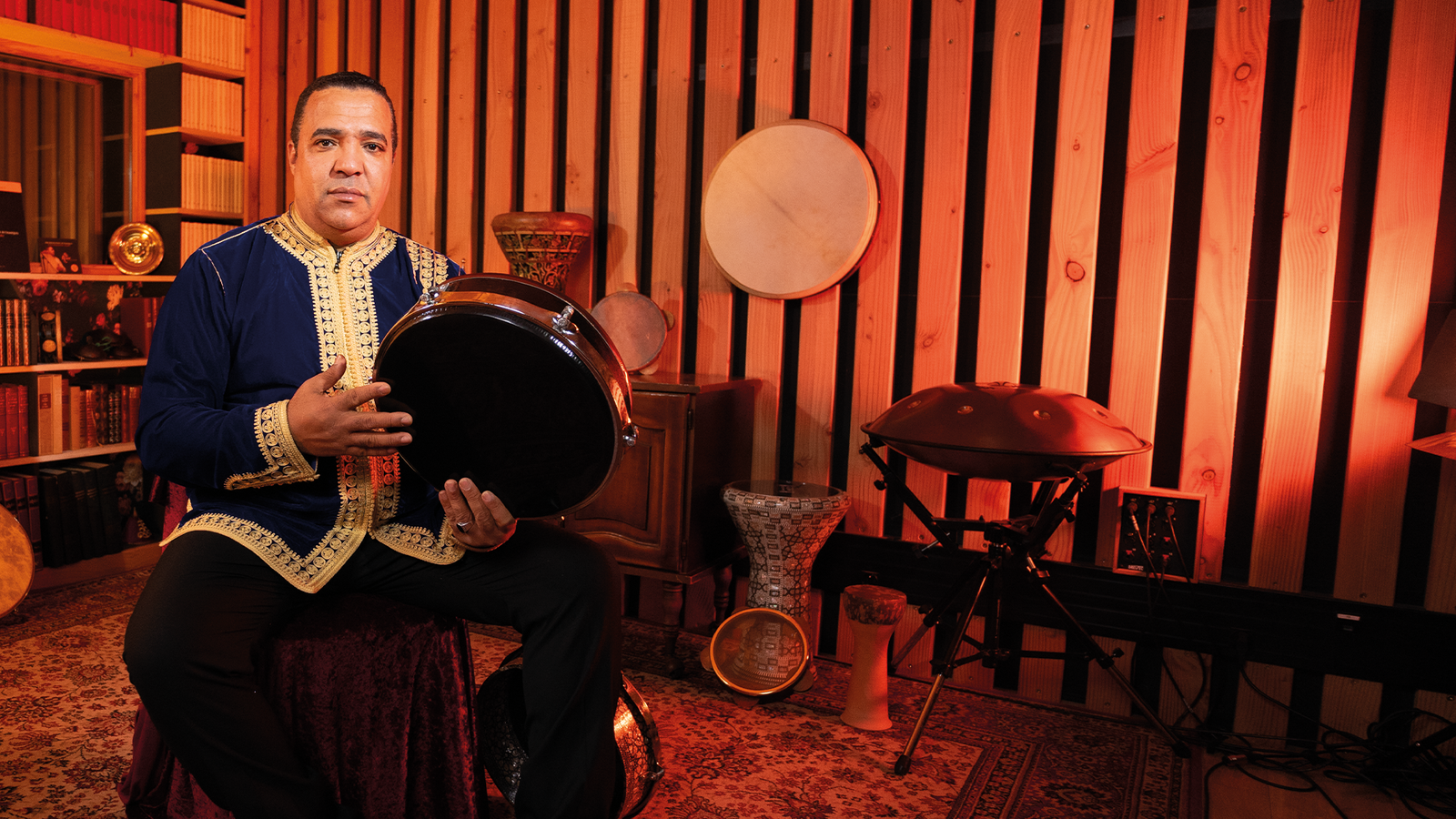
The programme is taught by Ali Alaoui, a state-certified music teacher and specialist in percussion instruments from the Arab world. His teaching method is based on solid foundations, a logical progression and particular attention to sound quality and musicality.
The aim is not simply to memorise strokes or rhythmic sequences. You will also learn to understand the bendir’s role in music, maintain a steady pulse and accompany singers or other musicians accurately.
Whether you are looking for a bendir course for beginners, a method for returning to the instrument after a break or exercises to enrich your playing, Melonea offers a learning path designed to help you make lasting progress.
What Is a Bendir?
The bendir is a percussion instrument belonging to the frame drum family. It is particularly common in the musical traditions of Morocco, Algeria, Tunisia and, more broadly, in different regions of North Africa and the Arab world.
It generally consists of a circular wooden frame covered with a stretched drumhead. Depending on the model, the head may be made from natural or synthetic material. Some bendirs also contain one or more strings placed against the inside of the drumhead. When the instrument is struck, these strings vibrate and create the bendir’s characteristic buzzing tone.
The bendir is mainly played with the hands and fingers. Its apparently simple construction conceals a remarkably rich range of sounds. By changing the striking area, finger position, angle of the instrument and pressure applied to the head, the musician can produce deep, high-pitched, open, muted or slapped sounds.
The bendir can maintain a steady pulse, support the main rhythm, accompany singing or participate in more complex polyrhythms. It plays an important role in many traditional, spiritual and popular musical styles.
An Emblematic Frame Drum of North Africa
The bendir is strongly associated with the music of North Africa. It can be heard in numerous Moroccan, Algerian and Tunisian traditions, with playing techniques and musical functions that vary according to the region.
It may be played alone, in a small ensemble or in a group involving several percussionists. In some traditions, several bendirs of different sizes are played simultaneously to create a powerful rhythmic texture.
The role of the bendir is not limited to producing volume. A good percussionist must be able to maintain the structure of the rhythm, listen to the other musicians and adapt their playing to the singing, dancing or musical context.
Depending on the repertoire, the bendir may provide a simple and steady pulse or contribute to highly dynamic rhythmic sequences. This versatility explains its lasting presence in many musical traditions.
How Is a Bendir Made?
The construction of a bendir is based on several essential components:
- The frame, which is generally circular and made from wood.
- The drumhead, which may be natural or synthetic.
- The tensioning system, which holds the drumhead securely on the frame.
- The snare strings, which are found on certain models and rest against the inside of the drumhead.
The diameter and depth of the frame influence both playing comfort and the instrument’s tonal character. A large bendir generally produces deeper bass sounds, whereas a smaller model may feel lighter and offer greater precision.
The material of the drumhead also affects the sound. A natural head often produces a warm and lively tone, but it may react to changes in temperature and humidity. A synthetic head is generally more stable and requires less maintenance.
Today, there are traditional bendirs, modern tunable models and instruments specifically designed for concerts, studio recording or regular practice.
What Are the Strings Inside a Bendir Used For?
Many bendirs contain one or more strings positioned against the inside of the drumhead. Depending on the design of the instrument, these strings may be made from natural or synthetic materials.
When the drumhead is struck, the strings vibrate and make light contact with it. This produces the characteristic buzzing or rattling sound that enriches the bendir’s tone.
This timbre gives the instrument a different character from that of a frame drum without strings. It can reinforce the depth of the sound and add a distinctive texture to the rhythm.
The intensity of the buzzing sound depends on several factors:
- the tension of the drumhead;
- the tension of the strings;
- the area in which the instrument is struck;
- the strength of the stroke;
- the angle of the bendir;
- the way the musician holds the frame.
The percussionist gradually learns how to control this vibration so that it enriches the sound without making the playing imprecise.
Is the Bendir a Moroccan Instrument?
The bendir plays a very important role in Moroccan music, but its use is not limited to Morocco. Similar frame drums can be found in several countries across North Africa, the Middle East and the Mediterranean region.
In Morocco, the bendir is used in numerous regional, popular, spiritual and traditional repertoires. It may accompany singing, dancing, ceremonies and various forms of collective music.
Playing techniques, instrument sizes and rhythmic patterns may differ from one region to another. It is therefore more accurate to describe the bendir as an emblematic North African percussion instrument that is deeply rooted in Moroccan musical culture but also present in other traditions.
What Is the Origin of the Bendir?
Frame drums are among the oldest percussion instruments. Their construction is relatively simple: a skin or membrane is stretched across a circular frame to create a vibrating surface.
Instruments belonging to this broad family have been used for a very long time in different parts of the world. They have accompanied ceremonies, songs, dances, community gatherings and spiritual practices.
The bendir forms part of this ancient history of frame drums. Over time, each region developed its own models, playing techniques and rhythmic traditions.
In North African societies, the bendir became much more than a simple accompanying instrument. It contributes to the distinctive sound of many repertoires and transmits a particular way of experiencing pulse, movement and collective performance.
An Instrument Connected to Singing and Dancing
In many traditions, rhythm is closely connected to singing and movement. The bendir can establish the tempo, support important accents and accompany the different stages of a performance.
The percussionist must therefore observe and listen carefully to the singers, dancers and other musicians. They do not play independently from the group: their role is to support the ensemble and strengthen its collective energy.
Depending on the context, the playing may remain very steady or gradually increase in intensity. The musician can add variations, stronger accents or silences in response to the other performers.
This ability to listen is just as important as technical mastery of the instrument.
A Tradition Historically Passed Down Orally
For a long time, the bendir was mainly learned through observation, listening and imitation. Rhythms were passed directly from one musician to another within families, groups and communities.
The learner observed the position of the hands, listened to the accents and repeated rhythmic phrases until they could reproduce them consistently.
This oral transmission remains essential because rhythm cannot be reduced to a sequence of written symbols. It has a particular feel, accentuation and style of interpretation.
Video lessons now make it possible to preserve this visual and auditory dimension while offering a more structured progression. Learners can watch each demonstration again, slow down their practice and repeat the exercises as many times as necessary.
What Are the Different Types of Bendirs?
There are several types of bendirs. They may differ in diameter, depth, materials, drumhead type and whether or not they contain snare strings.
Each instrument has its own tone and playing response. The right choice depends on the musical style, the player’s level and the level of comfort required.
The Traditional Bendir with a Natural Drumhead
A traditional bendir is generally made from a wooden frame and a natural drumhead. Its sound is often appreciated for its warmth, depth and rich vibrations.
However, a natural drumhead may loosen or tighten depending on the temperature and humidity. The instrument’s sound may therefore change slightly according to the conditions in which it is played or stored.
The musician must learn to understand the behaviour of the instrument and adapt their strokes when the tension of the drumhead changes.
Some percussionists gently warm the drumhead before playing in order to increase its tension. This must be done very carefully to avoid damaging the instrument.
The Bendir with a Synthetic Drumhead
Synthetic drumheads generally provide more stable tension. They are less sensitive to changes in humidity and may be easier to maintain.
They are often a practical choice for beginners, travelling musicians or people living in regions with significant climate variations.
Their sound may differ from that of a natural drumhead, but some modern bendirs offer excellent depth and precision.
The choice between a natural and synthetic drumhead mainly depends on the musician’s preferences and intended use.
The Tunable Bendir
Some modern bendirs include a mechanical system that allows the tension of the drumhead to be adjusted. The musician can therefore modify the instrument’s pitch and response.
A tunable bendir makes it possible to:
- adapt the tension of the drumhead to the playing style;
- compensate for certain climate-related changes;
- obtain a deeper or tighter sound;
- adjust the response of the instrument before a concert or recording session.
This type of bendir can be particularly useful in a professional context. However, it is not essential for a beginner.
A simple, comfortable and correctly tensioned instrument is sufficient for working on the initial positions, fundamental sounds and basic rhythms.
The Bendir with Snare Strings
A bendir with snare strings contains one or more strings resting against the inside of the drumhead. These strings vibrate when the instrument is struck and produce the characteristic buzzing sound commonly associated with the North African bendir.
The presence of the snare enriches the tone but also requires a certain level of control. A poorly placed stroke may produce too much vibration or an irregular sound.
Through practice, the musician learns how to use this resonance musically.
The Bendir without Snare Strings
Some frame drums do not contain internal strings. Their sound is generally more direct and dry.
Depending on the region and musical tradition, these instruments may have different names. Their playing techniques may share certain similarities with the bendir, but their sound and musical role are not always identical.
It is therefore important not to treat all frame drums as though they were the same instrument.
The Different Sizes of Bendirs
The diameter of a bendir can vary considerably. Smaller models are generally lighter and easier to handle. They may provide a quicker response and clearly defined high-pitched sounds.
Larger bendirs often produce deeper bass tones and a more enveloping sound. However, they may be heavier and require greater endurance.
When choosing the right size, several factors should be considered:
- the musician’s height and body shape;
- the weight of the instrument;
- the comfort of the hand holding the frame;
- the depth of sound required;
- the musical style being played;
- the usual length of practice sessions.
For beginners, it is preferable to choose an instrument that can be held comfortably for several minutes without causing excessive tension in the wrist, arm or shoulder.
What Is the Difference Between the Bendir and Other Frame Drums?
The bendir belongs to a large family of instruments consisting of a membrane stretched across a frame. It therefore shares certain characteristics with the daff, riqq and other traditional percussion instruments.
However, each instrument has its own construction, sound, technique and musical function.
What Is the Difference Between a Bendir and a Daff?
The bendir and the daff are both frame drums, but these names may refer to different instruments depending on the country and musical tradition.
The North African bendir often has a relatively deep frame and snare strings positioned against the drumhead. These strings create its characteristic buzzing tone.
The daff can take several forms. Some models have no internal strings, while others contain metal rings attached inside the frame.
The striking techniques and playing positions may also differ. Even when some movements are similar, the learning process must take account of each instrument’s specific characteristics.
What Is the Difference Between a Bendir and a Riqq?
The riqq is generally smaller than the bendir. It includes metal cymbals built into the frame, allowing it to produce both drumhead sounds and metallic sounds.
The bendir usually has a larger diameter and does not contain cymbals. Its tone mainly comes from the drumhead, frame and, depending on the model, the strings placed inside the instrument.
The riqq is often used in Arabic classical and Middle Eastern musical ensembles. The bendir is particularly common in traditional and popular North African music, although it can also be incorporated into contemporary musical projects.
What Is the Difference Between a Bendir and a Darbuka?
The darbuka is a goblet-shaped drum. It is generally placed on the thigh or held under the arm. The bendir is a frame drum held vertically or at a slight angle.
The darbuka produces highly defined sounds through the distinction between the centre and edge of the drumhead. The bendir offers a broader resonance and a different relationship between deep sounds, slaps and the vibration of the snare strings.
Both instruments can be used to perform some of the same rhythms, but their sound and role within the ensemble are different. Studying them together helps musicians understand the complementary nature of percussion instruments from the Arab world.
What Are the Fundamental Sounds of the Bendir?
Learning the bendir begins with mastering a few essential sounds. These form the basic vocabulary from which rhythms and variations are constructed.
The names used may vary according to the teacher, region or tradition. The most important thing is to understand the function of each stroke and reproduce it accurately.
The Bass Sound
The bass sound is generally produced by striking an area relatively close to the centre of the drumhead. It adds depth and often marks the important beats of the rhythm.
To obtain a good bass sound, the hand should rebound naturally after the stroke. If it remains pressed against the drumhead, the vibration is interrupted and the sound becomes shorter or muted.
Strength alone is not enough. A relaxed and accurately placed stroke often produces a deeper sound than an overly powerful and tense movement.
The High-Pitched Sound
The high-pitched sound is generally produced near the edge of the drumhead. Depending on the technique, it may sound dry, precise or slightly resonant.
It complements the bass strokes and helps form different rhythmic patterns.
The clarity of the sound depends on finger position, the speed of the movement and the ability to relax the hand immediately after contact with the drumhead.
The Slap
The slap is a brighter and more accented sound. It can be used to mark particular beats, reinforce a variation or add a distinctive colour to the rhythm.
This stroke requires precision. A movement that is too tense may tire the hand, while a poorly positioned movement produces a weak or irregular sound.
It is preferable to practise the slap slowly before incorporating it into fast rhythms.
Muted Sounds
Muted sounds are produced by deliberately limiting the vibration of the drumhead. The musician can keep part of the hand or fingers in contact with the instrument to create a shorter sound.
These strokes create contrast between open and closed sounds. They add precision and enrich the possibilities of accompaniment.
Finger Strokes
The bendir can be played with the palm, but also with different fingers. These lighter strokes make it possible to add intermediate notes, perform rolls and enrich the main rhythm.
Finger independence develops gradually through simple and repeated exercises.
There is no need to pursue speed immediately. The priority should remain regularity, relaxation and an even sound across the different strokes.
Silence
Silence is an integral part of rhythm. It gives space to the other instruments and makes the rhythmic structure easier to understand.
A beginner percussionist may be tempted to fill every part of the measure. However, effective accompaniment often depends on a balance between sounds, accents and silences.
Learning when not to play is an essential musical skill.
The Importance of Sound Quality
Mastering the bendir does not depend solely on the number of rhythms known or the speed of execution. It depends first and foremost on the quality of the sounds produced.
Each stroke should be identifiable and appropriate to the musical context. A bass sound should have sufficient depth, while a high-pitched sound should remain precise without becoming aggressive.
The first stages of learning therefore place considerable emphasis on posture, relaxation and the repetition of each sound separately.
By practising slowly, learners can correct their movements before they become habits. This approach encourages stronger and more lasting progress.
How to Hold a Bendir Correctly
A good playing position is essential when learning the bendir. It helps produce clearer sounds, allows you to play for longer without fatigue and prevents unnecessary tension in the hands, wrists, arms and shoulders.
The bendir is generally held vertically or at a slight angle. One hand supports the frame while the other performs most of the strokes. However, both hands take part in the playing and can produce different sounds depending on the technique used.
The exact position may vary according to the size of the instrument, the musical style, the tradition being studied and the percussionist’s habits. The most important thing is to maintain a stable, relaxed posture suited to your body shape.
Choose a Comfortable Position
To begin, sit on a stable chair with your back relatively straight and your shoulders relaxed. Your feet should rest on the floor to maintain good balance.
The bendir can be placed against one thigh or held slightly in front of the body. The frame should not be gripped too tightly. Excessive pressure can restrict movement and quickly cause fatigue.
The hand holding the instrument should keep it stable without becoming tense. The weight of the bendir should be distributed naturally between the hand, forearm and, depending on the chosen position, the leg.
Before starting the exercises, check the following points:
- the shoulders remain low and relaxed;
- the wrist is not excessively bent;
- the fingers can move freely;
- the bendir is unlikely to slip;
- the drumhead remains easy to reach with both hands;
- breathing remains natural.
A good position should not make you feel as though you are struggling against the weight of the instrument.
Hold the Bendir Without Restricting the Hand
One of the difficulties beginners often encounter is holding the bendir securely while keeping enough freedom to play.
If the hand grips the frame too tightly, the fingers become less mobile and tension spreads to the wrist and forearm. On the other hand, if the grip is too loose, the instrument may move with every stroke.
You therefore need to find a balance between stability and flexibility.
Begin by holding the bendir for a few minutes without playing. Notice any areas of tension and slightly adjust your position until you find a comfortable grip.
You can then perform simple strokes while checking that the bendir remains stable and that the supporting hand does not become tense.
Adapt the Position to the Size of the Bendir
A bendir with a smaller diameter is generally easier to handle. It can be held higher and requires less effort from the shoulder.
A large bendir often produces deeper bass tones, but its weight and diameter can make it more demanding to hold. In this case, it is important to use the support of the leg or body so that the hand does not carry the entire weight alone.
An instrument that is too large may restrict the precision of movement, especially for children or people with smaller hands. On the other hand, an instrument that is too small may not provide the desired depth of sound.
The best choice is the one that allows you to play with a natural posture.
Should the Bendir Be Played Sitting or Standing?
The bendir can be played while sitting or standing. For beginners, sitting is often more comfortable because it helps stabilise the instrument and makes it easier to focus on the movements.
Standing may be used in certain traditions, during concerts, ceremonies or performances connected to dance. It requires greater endurance and better control of the holding position.
Before playing while standing for long periods, it is preferable to master the sounds and rhythms in a stable position.
How to Produce a Good Sound on the Bendir
Sound quality depends on several factors: the striking area, the part of the hand used, the speed of the movement, muscular relaxation and the way the hand leaves the drumhead after contact.
A good sound does not necessarily require a powerful stroke. A precise, quick and relaxed movement can produce more depth and clarity than a forceful but tense one.
At the beginning of the learning process, it is recommended to practise each sound separately. This method makes it easier to identify the correct position and avoid confusing the different strokes.
Use the Natural Rebound of the Hand
To produce an open and resonant sound, the hand should generally leave the drumhead immediately after the stroke.
If it remains in contact with the surface, it blocks part of the vibration and creates a shorter sound. This principle is particularly important for the bass sound.
The movement can be compared to a rebound. The hand moves towards the drumhead, strikes it and then returns naturally to its starting position.
Do not pull the hand backwards abruptly. The movement should remain smooth and relaxed.
Practise Slowly Before Playing Fast
Speed should not be the first objective. When movements are performed too quickly, it becomes difficult to identify positioning errors or tension.
Slow practice makes it possible to check:
- the accuracy of each stroke;
- the quality of the sound;
- the consistency of the movement;
- the relaxation of the hand;
- the stability of the instrument;
- the evenness of the different notes.
Once the movement becomes natural, the tempo can be increased gradually.
Avoid Movements That Are Too Wide
A very large movement is not always more effective. It requires more energy and may slow down the transitions between strokes.
To play accurately, the hands should remain relatively close to the drumhead. The range of movement may vary according to the desired dynamics, but it should always remain controlled.
Short movements make it easier to play regularly and to alternate between bass, high-pitched and muted strokes.
Control the Strength of the Stroke
Playing loudly all the time limits musical expression. The bendir can produce different dynamics, from light strokes to powerful accents.
It is useful to practise the same exercise at several levels of intensity:
- very softly, to develop control;
- at medium volume, to work on consistency;
- more strongly, to learn how to produce accents without becoming tense.
This control of dynamics allows the player to adapt to singing, dancing and other instruments.
The Main Bendir Playing Techniques
Playing techniques may vary depending on the tradition and the teacher. Some use mainly the palm and fingers, while others include rotational movements, rolls or strokes performed with different parts of the hand.
Learning should begin with a few simple and clearly differentiated techniques. More advanced movements can be introduced gradually once the fundamentals have been mastered.
The Bass Stroke Near the Centre of the Drumhead
The bass stroke is often one of the first sounds studied. It is produced in an area close to the centre of the drumhead.
The hand should remain relaxed and strike the surface with a natural movement. After contact, it should rise quickly to allow the drumhead to vibrate.
The resulting sound should be deep, clear and relatively long.
To practise it, repeat one stroke at a time and leave enough silence between each note. Listen to the duration and depth of the sound.
Once the stroke becomes consistent, you can play a series of evenly spaced notes over a slow pulse.
The High-Pitched Stroke Near the Edge
The high-pitched sound is generally produced near the edge of the drumhead. It can be performed with the fingers or with a larger part of the hand, depending on the technique used.
This stroke should remain precise and clearly different from the bass sound.
To produce it, avoid pushing the hand into the drumhead. The movement is often shorter and quicker.
Practise alternating one bass sound and one high-pitched sound. Try to create a clear contrast between the two strokes.
The Slap
The slap is an accented stroke that produces a bright and sharp sound. It can be used to emphasise a beat or enrich a variation.
The exact technique depends on the type of bendir and the teaching method followed. In every case, the slap should be performed without pain.
If the hand becomes red, sensitive or painful, reduce the force and check the movement. Good technique relies on speed and accuracy rather than excessive strength.
Muted Strokes
A muted stroke is produced when the vibration of the drumhead is deliberately limited.
One hand or certain fingers may remain in contact with the drumhead while the other hand strikes it. The sound then becomes shorter and drier.
This technique creates contrast and makes rhythms more precise.
It is particularly useful when several rapid strokes need to remain clearly separated.
Fingertip Strokes
The fingers can produce lighter and more precise sounds than the palm. They are used to perform intermediate notes, ornaments and certain rolls.
Each finger can be practised separately to improve control.
Begin by alternating two fingers at a slow tempo. Aim for a similar level of intensity with every stroke.
You can then gradually add other fingers and increase the duration of the exercise.
Rolls
A roll is a rapid succession of strokes that creates the impression of a continuous sound or regular texture.
On the bendir, rolls can be performed in different ways depending on the technique being studied. They may use several fingers of the same hand or alternate between both hands.
To achieve a consistent roll, it is necessary to practise slowly. Each stroke should first be clear and balanced.
Speed develops gradually as the movements become shorter, more relaxed and better coordinated.
Accents
An accent is a stroke played more strongly than the surrounding notes. It highlights a part of the measure or reinforces the structure of a rhythm.
Accents should not change the tempo. The accented note is louder, but it must remain exactly in its proper place.
You can practise accents by playing a series of four regular strokes and successively accenting the first, second, third and fourth.
This exercise improves dynamic control and understanding of the measure.
Variations
A variation enriches the main rhythm by adding, removing or changing certain strokes.
It should not make the identity of the rhythm disappear. The pulse, measure and main accents should remain clear.
Before learning a variation, it is essential to master the simple version of the rhythm.
A musician who knows many variations but cannot maintain the main rhythm may destabilise the other members of the ensemble.
Developing Coordination Between Both Hands
The bendir requires a particular type of coordination. One hand often has to hold the instrument while also taking part in the playing, while the other performs different kinds of strokes.
This organisation may seem difficult at first. With progressive exercises, however, the movements become more natural.
Coordination does not depend only on speed. It mainly depends on the ability to place every stroke at the correct moment.
Begin with One Hand at a Time
Before alternating between both hands, it can be useful to practise each movement separately.
Repeat a bass sound several times with the main hand. Then practise a high-pitched sound or complementary stroke with the other hand.
This stage makes it possible to check the quality of each sound before combining them.
Alternate the Hands Regularly
Right-left alternation is a fundamental exercise.
Begin at a slow tempo and play one stroke per pulse. Check that both hands produce sounds of similar intensity.
You can then play two strokes per pulse or create short sequences.
The aim is to prevent one hand from dominating the other too strongly.
Work on Independence
Independence means assigning different roles to the two hands.
One hand may maintain a steady pulse while the other adds accents or intermediate notes.
Begin with a very simple structure. For example, one hand plays four regular strokes while the other plays only on the first beat.
Once this exercise becomes comfortable, gradually move the second hand’s stroke to the other beats.
Repeat Short Rhythmic Patterns
A rhythmic pattern is a short sequence of sounds. Repeating it improves coordination without requiring you to memorise a complete rhythm immediately.
You can begin with patterns of two or four strokes and gradually increase their length.
The repetition should remain attentive. If the sound or tempo becomes unstable, it is better to slow down rather than continue at the same speed.
How to Improve Your Timing on the Bendir
Consistency is one of the most important qualities of a percussionist. It helps maintain the stability of the music and provides a reference for singers, dancers and other instrumentalists.
A simple rhythm played steadily is generally more musical than a complex rhythm played inconsistently.
Timing develops through slow practice, listening and the use of suitable tools.
Understand the Pulse
The pulse is the steady beat that can be felt in music. It can be compared to a heartbeat or the regular steps of walking.
Before playing a rhythm, it is useful to feel this pulse by tapping your foot, clapping your hands or counting aloud.
When the pulse is stable internally, it becomes easier to place the different bendir strokes correctly.
Use a Metronome
A metronome produces steady beats at a chosen speed. It is a very useful tool for practising tempo.
Begin at a slow tempo, for example between 50 and 70 beats per minute. Play one stroke on each click.
Once the exercise is stable, you can play two strokes per click or add a short rhythmic pattern.
The metronome should not be considered a restriction. It provides an objective way to measure consistency and identify moments when the playing speeds up or slows down.
Count Aloud
Counting helps you understand the structure of the measure.
For a four-beat measure, you can count:
One – two – three – four.
For a binary subdivision, you can count:
One and two and three and four and.
For a ternary subdivision, you can count:
One and a two and a three and a four and a.
The counting method may vary depending on the teaching approach. The important thing is to maintain an even subdivision.
Play Slowly
A slow tempo reveals inconsistencies. When the notes are widely spaced, the musician must maintain the pulse without rushing.
This work develops concentration and control.
It is useful to choose a speed that is slow enough to produce clean sounds, but not so slow that the feeling of the rhythm disappears.
Increase the Tempo Gradually
Once the exercise is mastered, increase the metronome in small steps, for example by three to five beats per minute.
Avoid moving immediately from a slow tempo to a high speed.
If the sound quality or consistency deteriorates, return to the previous tempo and reinforce the movement.
Progress is not always linear. On some days, a tempo that usually feels comfortable may seem more difficult. In that case, it is better to slow down and prioritise accuracy.
Record Yourself Regularly
While playing, your attention is often focused on the movements. It can therefore be difficult to hear every inconsistency.
Recording yourself with a phone allows you to listen with greater objectivity.
During playback, check:
- whether the tempo remains steady;
- whether bass and high-pitched sounds are clearly different;
- whether certain strokes are too loud;
- whether the variations disturb the main rhythm;
- whether the silences are respected;
- whether the playing remains relaxed.
It is useful to keep some recordings so that you can hear your progress over the weeks.
Understanding Tempo, Measures and Subdivisions
To progress on the bendir, it is useful to understand a few simple rhythmic concepts. You do not need to master music theory immediately, but some basic knowledge makes rhythms easier to learn and remember.
What Is Tempo?
Tempo refers to the speed of the music. It is often measured in beats per minute, also known as BPM.
A tempo of 60 BPM is approximately one beat per second. A tempo of 120 BPM is twice as fast.
The same rhythm can be played at different speeds. Its identity remains the same, but its feel and energy may change.
What Is a Measure?
A measure is a regular group of pulses. It organises music into repeating cycles.
In a four-beat measure, the pulses can be counted as follows:
One – two – three – four.
After the fourth beat, the cycle begins again on the first beat.
Some rhythms use two, three, six or more beats. The structure depends on the repertoire and the musical tradition.
What Does a 4/4 Measure Mean?
In a 4/4 measure, the first number indicates that there are four beats in each measure.
The second number indicates the note value used as the beat. The number 4 represents a quarter note.
A 4/4 measure therefore contains four quarter-note beats.
You do not always need to read sheet music in order to learn a rhythm. However, it is useful to understand that the strokes are organised within four main pulses.
What Does a 6/8 Measure Mean?
In a 6/8 measure, the number 6 indicates that the measure contains six eighth notes.
The number 8 represents the eighth note.
Depending on the rhythm and the way the music is felt, these six eighth notes may be grouped into two main beats, each containing three subdivisions.
The feel can then be counted as:
One-two-three / four-five-six.
Many traditional rhythms use a ternary or compound feel.
What Is a Subdivision?
Subdivision means dividing each pulse into several equal parts.
In a binary subdivision, each beat is divided into two equal parts.
In a ternary subdivision, each beat is divided into three equal parts.
This difference strongly influences the feel of the rhythm. Two rhythms played at the same tempo may feel very different depending on their subdivision.
What Is the Difference Between Binary and Ternary Rhythm?
In a binary rhythm, the pulse naturally divides into two equal parts.
You can count:
One and two and three and four and.
In a ternary rhythm, the pulse divides into three equal parts.
You can count:
One-two-three, one-two-three.
Practising binary and ternary subdivisions helps develop a better understanding of rhythms from North Africa, the Middle East and other musical traditions.
The Role of the Bendir in a Musical Ensemble
The bendir can perform different roles depending on the repertoire and the number of musicians involved.
It can maintain the pulse, play the main rhythm, reinforce certain accents or take part in a polyrhythm.
Its role should always be adapted to the music. A percussionist should not try to play as many notes as possible.
Listening and the ability to leave space are essential.
Maintaining the Pulse
In some ensembles, the bendir mainly serves as a rhythmic reference. It maintains a steady pulse that the other musicians can follow.
This role may seem simple, but it requires great concentration. The percussionist must remain steady even when the melody, singing or other percussion parts become more complex.
Playing the Main Rhythm
The bendir may also perform the fundamental structure of the rhythm.
This main part must remain clear and recognisable. It helps the other instruments understand the measure and the important accents.
Variations can be added gradually, but they should not obscure this structure.
Accompanying a Singer
When accompanying a voice, the bendir player should listen carefully to the phrasing, breathing and changes in intensity.
They may play more softly during certain sections and strengthen the rhythm during choruses or more energetic passages.
Good accompaniment supports the singer without covering the voice.
Silence and dynamics often produce a more musical result than continuous and powerful playing.
Accompanying Dance
The bendir is frequently associated with dance. In this context, the rhythm must remain particularly steady and clear.
Dancers use the pulse and accents as reference points for their movements.
The percussionist should observe the energy of the dance and gradually adapt the dynamics without changing the tempo abruptly.
Taking Part in a Polyrhythm
A polyrhythm occurs when several different rhythmic parts are played simultaneously.
One bendir may maintain a repeating pattern while another instrument plays a complementary part.
Each musician must remain focused on their own role while listening to the overall result.
Polyrhythm requires a strong sense of pulse and a clear understanding of the shared structure.
Interacting with Other Percussion Instruments
In an ensemble, the bendir can interact with the darbuka, riqq, daff, tbal, taarija or other instruments.
Each percussion instrument has its own tonal character.
The bendir can provide depth and a broad texture, while the darbuka produces more defined sounds and the riqq adds metallic tones.
The aim is not for every instrument to play exactly the same part. Their complementary roles create a richer accompaniment.
The Bendir in Traditional North African Music
The bendir plays an important role in many North African musical traditions. It can be used in popular, rural, urban, spiritual or ceremonial music.
Techniques, rhythms and musical functions vary according to the region.
It is important to study these repertoires respectfully and not reduce their richness to a few isolated rhythmic formulas.
The Bendir in Moroccan Music
In Morocco, the bendir is present in many regional traditions.
It can accompany collective singing, poetry, dancing and ceremonies. It may be played alone or together with other percussion instruments.
The way it is held and struck can vary according to the repertoire.
In some styles, it provides a deep and steady pulse. In others, several bendirs play complementary parts to create a more complex texture.
The Bendir in Ahidous
Ahidous is a form of collective Amazigh singing and dancing particularly associated with Morocco’s Middle Atlas region.
Participants may form a circle or line and combine singing, poetry, movement and percussion.
The bendir plays a central role. It supports the pulse and contributes to the collective energy.
Consistency is essential because the percussion must remain connected to the movements of the group and the progression of the singing.
The Bendir in Ahwach
Ahwach refers to various Amazigh traditions of collective singing and dancing from southern Morocco.
The forms may vary from one region to another. Several percussion instruments may be used to support the singing and movement.
The bendir contributes to the creation of a collective pulse and to the gradual increase in musical intensity.
The Bendir in Aita
Aita is a Moroccan musical and poetic tradition with several regional forms.
The bendir may contribute to the rhythmic accompaniment alongside other percussion instruments.
The musician must pay attention to the singing, changes in phrasing and variations in intensity.
The accompaniment should preserve the identity of the rhythm while adapting to the development of the performance.
The Bendir in Sufi Music
The bendir is also present in various spiritual and Sufi repertoires.
It may accompany collective singing, invocations or ceremonies based on repetition and rhythmic progression.
In this context, stability and dynamic control are particularly important.
The rhythm may begin in a restrained manner and gradually increase in intensity while maintaining a clear pulse.
The Bendir in Algeria
In Algeria, the bendir is used in different regional and popular traditions.
It may accompany singing, dancing and several forms of collective music.
As in Morocco, techniques and rhythms vary according to the region. Some repertoires use several bendirs at the same time to strengthen the power of the rhythm.
The Bendir in Tunisia
In Tunisia, frame drums also play an important role in several musical traditions.
The bendir may be associated with popular, spiritual or ceremonial repertoires.
Its role may involve maintaining the pulse, accompanying singing or taking part in a polyrhythmic structure.
The Bendir in Contemporary Music
The bendir is not limited to traditional music.
It can now be heard in world music, jazz, fusion, film scores and certain electronic productions.
Musicians may use its deep tone to create original rhythmic textures.
However, even in a modern context, knowledge of traditional techniques and rhythmic fundamentals remains valuable.
It allows the instrument to be used with greater precision and musicality.
How to Avoid Common Bendir Mistakes
Beginners often encounter the same difficulties. Identifying them early makes it easier to progress and helps prevent bad habits from becoming established.
Gripping the Frame Too Tightly
A grip that is too strong creates tension in the hand, wrist and forearm.
It also reduces finger mobility.
The bendir should be held securely, but the hand must remain relaxed enough to participate in the playing.
Playing Only with Force
Power does not guarantee a good sound.
Striking too hard may create an aggressive tone, quickly tire the hand and make the movements less accurate.
It is better to work on speed of movement, placement and natural rebound.
Raising the Shoulders
When the instrument feels heavy, the musician may unconsciously raise one shoulder.
This tension quickly becomes tiring.
Check your posture regularly and relax your shoulders between exercises.
Trying to Play Fast Too Soon
Playing quickly before mastering the sounds reinforces mistakes.
Speed should result from precise and relaxed movement.
Begin slowly and increase the tempo only when every stroke remains clear.
Adding Too Many Variations
Variations can make the playing more expressive, but they should not replace the main rhythm.
An accompaniment that is too busy can disturb singers and other musicians.
Restraint and stability are often more effective.
Ignoring the Hand Holding the Instrument
The supporting hand does not only hold the bendir.
Depending on the technique, it can also produce strokes and modify the resonance.
It should therefore be practised with as much attention as the main hand.
Playing with Tension or Pain
Mild fatigue may appear during the first sessions, but pain should never be considered normal.
If you feel discomfort, stop the exercise, relax your hands and check your posture.
Short and regular sessions are preferable to long practice sessions performed with poor technique.
Why Learn to Play the Bendir?
Learning to play the bendir allows you to discover rhythm through an instrument deeply connected to the musical traditions of North Africa. Because it is played directly with the hands, the bendir allows musicians to feel the pulse and vibrations of the instrument immediately.
The bendir is accessible to beginners because it is possible to produce the first sounds and play simple rhythmic patterns from the very first lessons. However, mastering the instrument offers many opportunities for further development, including sound quality, hand coordination, dynamics, rolls, variations, accompaniment and polyrhythms.
Whether you want to discover a traditional percussion instrument, accompany singers, play with other musicians or simply improve your sense of rhythm, the bendir is a particularly rich and expressive instrument.
Develop Your Sense of Rhythm
Practising the bendir helps you feel the pulse and understand how strokes are organised within a measure.
By repeating simple rhythms, you gradually learn to distinguish between:
- the steady pulse;
- strong and weak beats;
- binary and ternary subdivisions;
- the main accents;
- silences;
- rhythmic variations.
These skills are useful not only for playing the bendir, but also for learning any other musical instrument.
A musician with a strong sense of timing can play more easily with a group, follow a singer and understand the structure of a piece of music.
Improve Your Coordination
Playing the bendir requires the two hands to work in complementary ways. One hand helps hold the instrument while also performing certain strokes, while the other can produce bass sounds, high-pitched sounds, slaps and ornaments.
This organisation gradually develops coordination and independence between the hands.
At first, some sequences may seem difficult. One hand may become tense or strike too early. Through slow and regular practice, the movements gradually become more natural.
Coordination exercises also improve precision and make it possible to perform more complex rhythms without losing the pulse.
Learn to Listen to Other Musicians
The bendir is often played in a group setting. It accompanies singing, dancing, melodic instruments and other percussion instruments.
The percussionist must therefore learn to listen carefully to everything happening around them.
They must be able to maintain the rhythm without overpowering the other musicians, adjust their volume and avoid adding too many variations when the music requires a more restrained approach.
This listening develops an essential quality: the ability to play for the music rather than simply to demonstrate technical ability.
Discover the Musical Traditions of North Africa
The bendir provides access to a wide range of Moroccan, Algerian, Tunisian and Amazigh repertoires.
Each tradition has its own way of feeling the pulse, accenting the beats and organising the different rhythmic parts.
Learning the bendir is therefore not only about memorising a sequence of strokes. It also involves understanding the cultural context, the function of the instrument and the relationship between rhythm, singing and movement.
This knowledge encourages a more respectful and musical approach to the instrument.
Play Alone or with a Group
The bendir can be practised alone with a metronome, video exercises or musical backing tracks.
Individual practice helps develop technique, consistency and memory.
However, the bendir takes on a different dimension when played with other musicians. It can support a singer, interact with a darbuka, strengthen a percussion line or take part in a polyrhythm.
Group playing teaches musicians to remain steady even when several rhythmic and melodic parts are performed at the same time.
Practise an Expressive Instrument
Despite its relatively simple construction, the bendir offers a wide variety of tones.
The musician can change the sound by modifying:
- the striking area;
- the part of the hand used;
- the strength of the movement;
- the pressure applied to the drumhead;
- the angle of the instrument;
- the use of silence;
- the dynamic contrasts.
The same rhythm can therefore be interpreted softly, deeply, dynamically or powerfully.
This range of possibilities allows percussionists to gradually develop their own musical identity.
An Accessible Instrument That Does Not Require Music Theory
It is not necessary to know how to read music in order to begin learning the bendir.
Rhythms can be learned through listening, observation and repetition. Movements can be demonstrated visually, and the different strokes can be associated with simple syllables.
Basic rhythmic theory can then be introduced gradually to help learners understand measures, subdivisions and structures more clearly.
A lack of theoretical knowledge is therefore not an obstacle to getting started.
A Musical Activity Suitable for Different Ages
The bendir can be practised by children, teenagers and adults.
For younger learners, it is important to choose a lightweight instrument suited to their size. Practice sessions should remain short, progressive and enjoyable.
Adults can also begin without any previous musical experience. Progress does not depend on age, but mainly on the consistency of practice and the quality of concentration.
What Rhythms Can Be Played on the Bendir?
The bendir can be used to perform many rhythms from North Africa, the Middle East and other musical traditions.
Some rhythms can be played on several percussion instruments, but their interpretation changes according to the sound, technique and role of each instrument.
On the bendir, a rhythm can first be presented in a simple form and then enriched with variations, accents and intermediate notes.
It is preferable to master the main structure before adding ornaments.
Moroccan Rhythms
Moroccan music has a great rhythmic diversity linked to the country’s regions, languages, traditions and social contexts.
The bendir is particularly present in several Amazigh, popular, rural, spiritual and ceremonial repertoires.
Depending on the tradition being studied, the musician may encounter rhythms associated with:
- Ahidous;
- Ahwach;
- different forms of Aita;
- certain Sufi musical traditions;
- repertoires from the Middle Atlas;
- traditions from southern Morocco;
- collective and ceremonial songs.
There is no single way to play the Moroccan bendir. Techniques and rhythmic patterns may vary from one region to another.
It is therefore important to learn each rhythm within its cultural context and understand its feel rather than reducing it to a simple sequence of strokes.
Amazigh Rhythms
The bendir plays a central role in several Amazigh musical traditions.
It can support collective singing, accompany group movement and contribute to a gradual increase in musical energy.
In some ensembles, several bendirs are played at the same time. The musicians may perform the same pulse or complementary rhythmic parts.
Collective precision is essential. A small inconsistency in one player’s performance can affect the balance of the entire group.
Learning these repertoires therefore requires careful listening and particular attention to the relationship between rhythm, singing and dance.
Algerian Rhythms
The bendir is also present in various traditional Algerian musical styles.
It can accompany singing, dancing and musical forms associated with different regions of the country.
The rhythms may be performed alone or combined with other percussion instruments.
As in Moroccan traditions, the interpretation depends on the musical context. The same time signature may create a different feel depending on the accents, tempo and articulation of the strokes.
Tunisian Rhythms
Frame drums are used in several Tunisian musical repertoires.
The bendir can maintain the pulse, support a song or take part in a combination of rhythmic parts.
Some rhythms are based on a clear binary feel, while others use ternary subdivisions or more unusual cycles.
Learners should first understand the overall structure before focusing on variations.
Middle Eastern Rhythms
Although the bendir is strongly associated with North Africa, it can also be used to perform various rhythms from the Middle East.
Structures such as Maqsoum, Baladi, Malfouf, Ayoub and Samai can be adapted to several types of frame drum.
However, the way these rhythms are played on the bendir differs from their interpretation on the darbuka or riqq.
The bendir’s wider resonance provides greater depth, while the internal snare strings can add a buzzing texture to the strokes.
Binary Rhythms
Many rhythms are based on a binary subdivision.
In this case, each pulse can be divided into two equal parts.
The musician can count:
One and two and three and four and.
Measures such as 2/4 and 4/4 are often associated with a binary feel, although their interpretation always depends on the repertoire.
For beginners, these structures provide a simple way to practise alternating between bass and high-pitched sounds.
Ternary and Compound Rhythms
In a ternary subdivision, each pulse is divided into three equal parts.
The musician can count:
One-two-three, one-two-three.
A 6/8 measure can be felt as two main beats, each containing three subdivisions.
This feel is particularly important in several traditional North African musical styles.
It is not enough to play six even strokes. The musician must understand how the notes are grouped and feel the main accents.
Asymmetrical Rhythms
Some musical traditions use cycles that are not divided into perfectly equal groups.
It is possible to encounter measures in five, seven, nine or ten beats, as well as other rhythmic cycles.
These structures may seem complex when they are learned only through counting.
An effective method is to divide them into smaller groups, for example:
Two plus three, or three plus two plus two.
The learning process should remain gradual. Before studying asymmetrical cycles, it is preferable to master binary and ternary pulses.
Polyrhythms
A polyrhythm is created when several different rhythmic parts are performed at the same time.
One bendir may play the main pulse while another instrument adds accents or a complementary pattern.
In some ensembles, several percussionists perform rhythmic lines that appear independent but come together within the same cycle.
To learn a polyrhythm, it is useful to follow several steps:
- Identify the shared pulse.
- Learn each part separately.
- Repeat each pattern slowly.
- Combine two simple parts.
- Listen to the overall result without losing your own line.
- Increase the tempo gradually.
Polyrhythmic practice develops listening, concentration and rhythmic independence.
How to Choose the Right Bendir
Choosing your first bendir is an important step in your musical journey. A comfortable and well-made instrument makes learning easier, while an unsuitable model may create unnecessary difficulties.
Many beginners believe that an expensive bendir is essential. In reality, what matters most is choosing an instrument that suits your level, your body shape and your musical goals.
Several factors should be considered before making your choice.
Choose the Right Size
The diameter of the bendir has a direct impact on both comfort and sound.
A smaller bendir is generally lighter and easier to hold for long practice sessions. It also responds quickly and often produces brighter sounds.
A larger bendir usually offers deeper bass tones and a fuller resonance, but it may require greater endurance and stronger arm support.
When choosing the size of your bendir, consider:
- your height;
- the size of your hands;
- your physical strength;
- the type of music you want to play;
- the duration of your practice sessions.
If possible, hold several instruments before making your decision. A bendir should feel comfortable from the very first minutes.
Natural or Synthetic Drumhead?
Both natural and synthetic drumheads have advantages.
A natural drumhead generally produces a warm, lively and expressive sound. Many traditional musicians appreciate its richness and natural resonance.
However, natural skins are sensitive to changes in humidity and temperature. Their tension may vary throughout the year, which affects both the pitch and the playing feel.
Synthetic drumheads are much more stable. They require less maintenance and usually remain consistent regardless of climate conditions.
For many beginners, a synthetic drumhead is an excellent choice because it allows them to focus on technique rather than instrument maintenance.
Should You Choose a Tunable Bendir?
Some bendirs include a tuning system that allows the player to adjust the tension of the drumhead.
This makes it possible to:
- adapt the sound to different musical situations;
- compensate for climate changes;
- obtain a deeper or brighter tone;
- prepare the instrument for recording or live performance.
Although this feature can be useful, it is not essential for beginners.
A well-built bendir with a comfortable playing position is far more important than a sophisticated tuning system.
Frame Quality
The wooden frame should feel solid and well balanced.
Check that:
- the frame is perfectly round;
- there are no cracks or visible defects;
- the edges are smooth and comfortable to hold;
- the drumhead is evenly attached;
- the instrument feels balanced in your hand.
A well-made frame improves comfort and contributes to a more stable sound.
The Importance of the Instrument’s Tone
Every bendir has its own personality.
Some instruments produce powerful bass tones, while others offer brighter and more defined sounds.
Instead of searching for the “best” bendir, try to find one whose sound inspires you and matches the music you wish to play.
If you have the opportunity, listen to several instruments before making your choice.
How Much Should You Spend?
A beginner does not need a professional instrument costing several hundred euros.
The priority should be to purchase a reliable bendir that allows you to develop good technique.
As your experience grows, you will better understand which characteristics matter most for your musical style.
Many experienced percussionists own several bendirs of different sizes and sounds for different situations.
Should You Buy a Second-Hand Bendir?
A second-hand bendir can be an excellent option if it has been well maintained.
Before buying a used instrument, check:
- the condition of the drumhead;
- the stability of the frame;
- the condition of the internal snare strings, if present;
- the overall sound quality;
- whether the instrument has been stored correctly.
Avoid purchasing an instrument with a warped frame or a damaged drumhead unless you are prepared to repair it.
How to Maintain a Bendir
Proper maintenance helps preserve both the sound and the lifespan of your instrument.
Fortunately, maintaining a bendir is relatively simple.
Regular care prevents unnecessary wear and allows the instrument to remain comfortable to play for many years.
Protect the Bendir from Humidity
Humidity is one of the main factors affecting natural drumheads.
Excess moisture can loosen the skin and reduce the instrument’s resonance.
Whenever possible:
- store the bendir in a dry room;
- avoid leaving it on damp floors;
- protect it from rain;
- allow it to dry naturally if it becomes damp.
Proper storage helps maintain consistent sound quality.
Avoid Extreme Temperatures
Very high or very low temperatures may affect both the wooden frame and the drumhead.
Do not leave your bendir:
- inside a hot car;
- next to a radiator;
- in direct sunlight for long periods;
- in freezing conditions.
Allow the instrument to adapt gradually to temperature changes before playing.
Use a Protective Case
A padded case protects the bendir during transport.
It reduces the risk of:
- scratches;
- impacts;
- dust accumulation;
- accidental damage.
Even if you only play at home, storing the bendir in a protective case is a good habit.
Cleaning the Drumhead
The drumhead generally requires very little maintenance.
Simply wipe away dust using a clean, dry cloth.
Avoid using aggressive cleaning products or excessive amounts of water.
If your bendir has a natural drumhead, always follow the manufacturer’s recommendations before applying any product.
Tuning the Bendir
If your bendir is tunable, adjust the tension gradually.
Avoid tightening one side excessively while leaving the others loose.
Small adjustments made evenly around the frame usually produce the best results.
Take your time and listen carefully after each adjustment.
Should You Heat a Natural Drumhead?
Some traditional musicians gently warm natural drumheads before playing in order to increase their tension.
This practice should always be carried out with great care.
Excessive heat may permanently damage the skin.
Beginners are generally advised to avoid heating the instrument until they have learned the correct methods.
How to Make Faster Progress on the Bendir
Many beginners wonder how they can improve more quickly.
The answer is rarely to practise for several hours every day.
Steady and thoughtful practice is usually far more effective than occasional long sessions.
Progress comes from consistency, concentration and good habits.
Practise Regularly
Even fifteen to twenty minutes of focused practice each day can produce excellent results.
Regular repetition allows your muscles and your brain to memorise movements naturally.
Short daily sessions are often more productive than a single long session once a week.
Work on One Skill at a Time
Avoid trying to improve everything simultaneously.
Instead, dedicate each practice session to one specific objective, for example:
- sound quality;
- bass strokes;
- high-pitched strokes;
- timing;
- hand coordination;
- a single rhythm.
This focused approach leads to faster and more lasting improvement.
Practise Slowly
Slow practice allows you to detect mistakes before they become habits.
When everything feels easy at a slow tempo, increasing the speed becomes much simpler.
Never sacrifice sound quality for speed.
Use a Metronome Frequently
The metronome remains one of the most valuable practice tools.
It develops:
- steady timing;
- pulse awareness;
- tempo control;
- confidence when playing with other musicians.
Even experienced percussionists continue using a metronome throughout their careers.
Record Yourself
Listening to your own playing objectively is one of the fastest ways to improve.
Recording reveals details that often go unnoticed while performing.
Compare recordings over several weeks to measure your progress.
Listen to Great Percussionists
Regular listening develops musical taste and rhythmic understanding.
Pay attention to:
- their timing;
- their sound quality;
- their dynamics;
- their use of silence;
- their interaction with other musicians.
Listening is an essential part of learning music.
Stay Patient
Learning the bendir is a long-term journey.
Some days will feel easier than others.
Do not become discouraged if progress seems slow.
Every correctly repeated movement strengthens your technique and brings you closer to confident, expressive playing.
A Progressive Learning Program for Beginners
One of the most effective ways to learn the bendir is to follow a structured progression. Trying to learn advanced rhythms too early often leads to poor technique, inconsistent timing and unnecessary frustration.
Each stage should build naturally on the previous one. Mastering the fundamentals first makes learning more complex rhythms much easier later on.
Below is an example of a progressive learning path for beginners.
Step 1: Discover the Instrument
Before playing your first rhythm, take time to become familiar with your bendir.
Learn to:
- hold the instrument comfortably;
- maintain a relaxed posture;
- identify the different parts of the bendir;
- understand where each sound is produced;
- develop a natural hand position.
This first step may seem simple, but it creates the foundation for everything that follows.
Step 2: Produce Clean Sounds
Your first objective is not speed.
Instead, focus on producing:
- a deep bass sound;
- a clear high-pitched sound;
- a controlled slap;
- consistent volume;
- relaxed movements.
Repeat each stroke separately before combining them.
Sound quality is always more important than speed.
Step 3: Develop a Steady Pulse
Once the basic sounds are comfortable, begin working with a metronome.
Play one stroke on every beat.
Then practise:
- two strokes per beat;
- simple binary subdivisions;
- ternary subdivisions;
- basic accents.
Your priority should be keeping the tempo perfectly steady.
Step 4: Learn Your First Rhythms
Start with simple rhythmic patterns.
Play them slowly until they become completely natural.
At this stage, avoid adding unnecessary variations.
A rhythm played cleanly is always more musical than a complicated rhythm played inconsistently.
Step 5: Improve Hand Coordination
As your confidence grows, begin developing independence between your hands.
Practise:
- alternating hands;
- simple coordination exercises;
- different dynamic levels;
- basic rhythmic combinations.
Do not increase the tempo until every movement feels relaxed.
Step 6: Add Variations
Once the main rhythm feels comfortable, begin introducing small variations.
Keep the identity of the rhythm clear.
A variation should enrich the groove, not replace it.
Always return to the original rhythm before trying a new variation.
Step 7: Play Along with Music
One of the best ways to develop musicality is to play with recordings.
Choose music with a clear pulse.
Begin by playing only the main rhythm.
Gradually add accents and simple variations while listening carefully to the other instruments.
Step 8: Discovering New Rhythms
Once you have mastered your first rhythm, learn a new rhythmic pattern with a different feel.
For example, you can compare a binary rhythm with a
ternary rhythm.
This comparison develops your musical understanding and prevents you from playing every repertoire with the same accents.
Learn Bendir Online with Melonea
Learning the bendir on your own can be difficult when the available videos do not follow a clear learning progression.
It is common to find demonstrations of rhythms or advanced techniques without detailed explanations of posture,
fundamental sounds, or rhythmic consistency.
Melonea’s online bendir courses have been designed to provide a more structured learning experience.
The goal is to help you progress step by step, from the fundamentals of the instrument to performing traditional rhythms
and more advanced musical pieces.
You can watch each lesson as many times as you need, pause the videos, and practice at your own pace.
This flexibility is especially valuable for people who cannot find a bendir teacher near where they live
or who want to organize their learning according to their own schedule.
A Progressive Method for Learning the Bendir
The learning program begins with the essential fundamentals:
- discovering the instrument;
- body posture;
- how to hold the bendir;
- hand positioning;
- the main sounds;
- the first coordination exercises;
- rhythmic consistency;
- the first rhythms.
These foundations allow you to build a solid technique before moving on to variations,
combinations, and polyrhythms.
Each step prepares you for the next. You should not immediately try to reproduce fast phrases
before understanding the movements that make them up.
This progressive approach helps prevent bad habits and makes learning easier.
Courses Accessible to Beginners
The courses are designed for people who have never played a percussion instrument.
There is no need to know music theory or be able to read sheet music.
Each movement is demonstrated visually, and the rhythms are explained step by step.
Beginners can observe the hand positions, hear the difference between the sounds, and repeat each exercise until they feel confident enough to move on to the next step.
Video lessons also allow you to review difficult sections without pressure and without having to keep up with the pace of a group.
A Course Designed for Experienced Musicians
Musicians who already play the darbouka, riqq, daff, or other percussion instruments can also take the bendir course.
Although some rhythmic principles are common to several instruments, the way the bendir is held, its resonance, and its playing technique require a specific adaptation.
Experienced percussionists can further develop:
- producing the characteristic sounds of the bendir;
- mastering its unique tone;
- developing the specific coordination of both hands;
- performing traditional Maghrebi rhythms;
- using the bendir in an ensemble;
- playing traditional polyrhythms.
Learning a new instrument also expands your musical vocabulary and provides a deeper understanding of the role of each percussion instrument.
Bendir Lessons with Ali Alaoui
The program is taught by Ali Alaoui, a state-certified music teacher and specialist in the percussion instruments of the Arab world.
His teaching places great importance on building strong fundamentals.
Before focusing on speed or technical effects, students learn how to produce clear sounds, maintain a steady pulse, and understand the role of rhythm in music.
This approach helps develop a more musical style of playing that is better suited to accompaniment.
The instructor demonstrates every movement from different angles and explains the most common mistakes to avoid.
This allows students to understand not only which stroke to play, but also how to execute it correctly.
Learn at Your Own Pace
Online lessons offer complete flexibility.
You can follow the lessons:
- from home;
- on a computer;
- on a tablet;
- on a smartphone;
- whenever it suits you;
- without having to travel.
Some people prefer to practice for a few minutes every day, while others schedule two or three longer sessions each week.
The most important thing is to practice consistently.
You can also go back to the first lessons after several weeks to check your posture and the quality of your sound.
Watch the Lessons as Many Times as You Need
Repetition is essential when learning rhythm.
An explanation that seems difficult the first time you watch it may become much clearer after several practice sessions.
The video lessons allow you to review in detail:
- finger position;
- hand angle;
- the striking area;
- the rebound motion;
- sound combinations;
- the structure of a rhythm.
You can pause the video after each demonstration, practice slowly, and continue with the lesson once you have mastered the movement.
A Teaching Method Based on Consistency
Consistency is at the heart of the method.
A percussionist must be able to maintain a steady tempo and the structure of the rhythm before adding embellishments.
The exercises gradually help you develop:
- the pulse;
- stroke placement;
- tempo stability;
- accents;
- silences;
- subdivisions;
- dynamics.
This approach is especially important when playing with other musicians.
A steady bendir provides a solid rhythmic reference for singers, dancers, and fellow percussionists.
Understand Rhythms Before Memorizing Them
A rhythm should not be learned as nothing more than a sequence of movements.
It is important to understand its time signature, accents, and overall feel.
Throughout the course, students learn to identify the main pulse and distinguish the important strokes from ornamental notes.
This understanding makes rhythms easier to memorize and allows them to be performed more naturally.
It also makes it easier to recover the rhythmic structure if a mistake occurs.
Develop Musicality, Not Just Technique
Technique is essential, but it should always serve the music.
A good percussionist knows when to play, when to emphasize certain strokes, and when to leave space.
They must also be able to listen to the other musicians and adapt their playing to the musical context.
That is why the courses place great importance on musicality, accompaniment, and respecting the main rhythm.
The goal is not to fill every silence with fast strokes, but to develop balanced playing that truly serves the ensemble.
Learn Several Percussion Instruments from the Arab World
A Melonea subscription is not limited to a single instrument.
You can also discover several percussion instruments from the Arab world and deepen your understanding of their different rhythmic roles.
Depending on the courses available, you can learn:
- darbouka;
- riqq;
- daff;
- taarija;
- tbal;
- qraqeb;
- bendir.
Each instrument has its own sound, technique, and musical function.
Together, they provide a broader understanding of the musical traditions of the Maghreb and the Middle East.
Complement Your Bendir Skills with the Darbouka
The darbouka offers highly defined sounds and a wide variety of fast strokes.
The bendir produces a broader resonance and a deeper tone.
Studying both instruments helps you understand how they complement each other.
In an ensemble, the bendir can provide a deep rhythmic foundation, while the darbouka adds sharper sounds and rhythmic variations.
This teaches musicians not to play exactly the same part on every instrument.
Complement Your Bendir Skills with the Riqq
The riqq combines the sound of the drumhead with the bright sound of its metal jingles.
Its tone is brighter than that of the bendir.
By studying these two instruments together, students discover how the same rhythmic structure can be interpreted differently depending on the percussion instrument being played.
The bendir generally provides depth, while the riqq highlights details and subdivisions.
Discover the Daff and Other Frame Drums
The daff also belongs to the family of frame drums.
However, its construction and playing techniques vary depending on the musical tradition.
Studying different frame drums helps you recognize their similarities in playing position while understanding the differences in sound and musical function.
This comparison enriches your bendir playing.
Understanding Maghrebi Polyrhythms
Some traditional musical styles use several rhythmic parts played simultaneously.
One instrument may maintain the main pulse while another plays a complementary rhythmic pattern.
The polyrhythm courses explain how these different parts fit together.
You can learn each rhythmic line separately before listening to how they combine.
This approach develops independence, listening skills, and the ability to perform confidently in an ensemble.
Who Are the Online Bendir Courses For?
These courses are suitable for a wide range of students.
They are designed for complete beginners as well as musicians who wish to deepen their knowledge of Maghrebi percussion.
For Complete Beginners
Absolute beginners can start with the first lessons covering how to hold the instrument, produce the basic sounds, and develop a steady pulse.
No previous musical experience is required.
All you need is a suitable bendir and regular practice.
For Self-Taught Percussionists
Many people learn by watching videos or copying rhythms they hear in music.
While this approach can develop a certain level of ease, it may also leave technical gaps.
Structured lessons allow students to revisit the fundamentals, improve their playing position, and better understand rhythms they already know.
For Darbouka Players
Darbouka players already possess valuable rhythmic knowledge.
However, they must adapt their playing position and technique to the bendir.
The weight of the instrument, the resonance of the drumhead, and the role of both hands are different.
The course guides students through this transition step by step.
For Singers and Musicians
Singers can learn the bendir to accompany certain rhythmic passages or to gain a better understanding of accompaniment.
Players of the oud, qanun, ney, and other melodic instruments can also improve their sense of rhythm through bendir practice.
This makes communication with percussionists during rehearsals much easier.
For Those Interested in the Musical Culture of the Maghreb
The bendir is deeply rooted in many Moroccan, Algerian, Tunisian, and Amazigh musical traditions.
Learning the instrument allows students to explore these repertoires through practical experience.
As a result, they gain a better understanding of the relationship between rhythm, singing, poetry, and dance.
For Those Who Cannot Find a Local Teacher
Finding a bendir teacher can be difficult, especially outside major cities.
Online courses provide access to a structured learning method without being limited by geographical location.
You can learn from France, Morocco, Belgium, Switzerland, Canada, or anywhere else with an internet connection.
How Long Does It Take to Learn the Bendir?
The time required to learn the bendir depends on several factors:
- how often you practice;
- the amount of time spent on each practice session;
- your previous musical experience;
- the difficulty of the rhythms you study;
- the quality of your technique;
- your personal goals.
A beginner can learn the basic sounds and a simple rhythm within a few practice sessions.
However, producing a consistent sound, playing with other musicians, and mastering several musical traditions requires more time.
Learning the bendir should be viewed as a continuous journey rather than a race.
The First Few Weeks
During the first weeks, students mainly focus on:
- body posture;
- holding the instrument correctly;
- low and high tones;
- coordination;
- the pulse;
- the first rhythmic patterns.
It is perfectly normal for the bendir to feel heavy or for some sounds to lack precision at first.
The body needs time to adapt to the posture and the new movements.
After a Few Months of Practice
With regular practice, students are generally able to play several simple rhythms, follow a metronome, and accompany music at a moderate tempo.
The quality of the sounds becomes more consistent, and both hands begin to work together more naturally.
Simple variations can then be added without interrupting the main rhythm.
Long-Term Progress
Mastering the bendir takes time.
Even experienced percussionists continue to work on sound quality, dynamics, regional traditions, and polyrhythms.
Every new repertoire introduces different musical feelings, playing positions, or ways of emphasizing accents.
Learning the bendir is therefore an ongoing and constantly evolving journey.
Frequently Asked Questions About the Bendir
Can You Learn the Bendir on Your Own?
Yes, it is possible to start learning on your own, but following a structured method makes progress much easier.
Without guidance, beginners may develop poor playing habits or use excessive force.
Video lessons allow you to observe each movement in detail and follow a logical learning progression.
However, students should pay close attention to their posture and record themselves regularly to identify and correct mistakes.
Is the Bendir Difficult to Learn?
The first sounds and rhythms are accessible to beginners.
The difficulty increases as you aim for greater precision, speed, rolls, and polyrhythms.
The bendir is therefore easy to begin with but offers endless possibilities for improvement.
Slow and consistent practice allows you to progress without skipping important steps.
Do You Need to Know Music Theory to Play the Bendir?
No. You do not need to know music theory to get started.
Rhythms can be learned through listening, observation, and repetition.
Basic theoretical concepts such as the pulse, time signatures, and subdivisions become useful later for understanding rhythmic structures more deeply.
Which Bendir Should a Beginner Choose?
Beginners should choose a bendir that is comfortable to hold—neither too heavy nor too large.
A medium-sized model is often a good choice for adults.
The drumhead should be properly tensioned, and the main sounds should be easy to distinguish.
A synthetic or tunable bendir can be convenient, but it is not essential for beginners.
What Size Bendir Should You Choose?
The ideal size depends on your body type and the sound you are looking for.
A smaller bendir is lighter and easier to handle.
A larger bendir generally produces deeper bass tones but requires more endurance.
The best choice is one that you can comfortably hold throughout an entire practice session.
Can You Learn the Bendir Without Owning One?
You can begin by practicing the pulse and simple rhythmic patterns by clapping your hands or tapping on a soft surface.
However, a real bendir quickly becomes necessary to learn proper holding technique, resonance, striking areas, and tone control.
How Long Should You Practice Each Day?
Practicing for fifteen to thirty minutes a day is enough to make progress, provided you practice consistently.
Beginners should avoid sessions that are too long, as they can cause fatigue and unnecessary tension.
Several short practice sessions throughout the week are generally more effective than one long session.
Can You Play the Bendir with Small Hands?
Yes, but it is important to choose a bendir that is the right size.
An instrument that is too large can make holding it and performing certain strokes more difficult.
Children and people with smaller hands can start with a lighter bendir with a smaller diameter.
Can Playing the Bendir Hurt Your Hands?
Poor technique or using excessive force can cause pain.
Your strokes should rely on relaxation, speed, and rebound rather than constant tension.
If you experience pain, stop practicing, relax your hands, and check your playing position.
Persistent pain should never be ignored.
What Is the Difference Between the Bendir and the Darbouka?
The bendir is a frame drum, while the darbouka is a goblet-shaped drum.
They differ in the way they are held, their sound, and their playing techniques.
The bendir produces a broad, deep resonance, whereas the darbouka generally offers more precise tones and allows for fast combinations of strokes.
The two instruments complement each other.
What Is the Difference Between the Bendir and the Daff?
Both instruments belong to the frame drum family.
The Maghrebi bendir often features internal snare strings that produce a characteristic buzzing sound.
The term daff can refer to several different types of frame drums depending on the country, sometimes with metal rings attached inside the frame.
Their playing techniques and musical roles vary according to regional traditions.
What Is the Difference Between the Bendir and the Riqq?
The riqq is smaller and features built-in metal jingles.
It therefore produces both drumhead sounds and metallic tones.
The bendir is generally larger and offers a deeper, warmer sound.
Is the Bendir Only Used in Morocco?
No. Although the bendir plays an important role in Moroccan music, it is also widely used in Algeria, Tunisia, and other parts of North Africa.
Similar frame drums can also be found throughout the Middle East, the Mediterranean region, and many musical traditions around the world.
Can You Play Middle Eastern Rhythms on the Bendir?
Yes. Many Middle Eastern rhythms can be adapted to the bendir.
However, they will sound and feel different from the way they are played on the darbouka or the riqq.
It is important to adapt your strokes to the characteristics of the instrument.
Can the Bendir Be Used in Modern Music?
Yes. The bendir can be incorporated into world music, jazz, fusion, electronic music, and acoustic projects.
Its deep resonance makes it ideal for creating unique rhythmic textures.
Nevertheless, mastering the traditional fundamentals remains essential for developing precise and musical playing.
How Do You Tune a Bendir?
The tuning method depends on the type of bendir.
A tunable bendir usually features tuning screws or a mechanical system that allows the drumhead tension to be adjusted.
Adjustments should always be made gradually and evenly around the frame.
A natural, non-tunable drumhead may react to changes in temperature and humidity, but it should never be heated without proper care.
How Do You Clean a Bendir?
Use a clean, dry cloth whenever possible.
Avoid harsh cleaning products and excessive moisture.
If your bendir has a natural skin head, follow the manufacturer’s recommendations before applying any cleaning product.
Store the instrument in a protective case and keep it in a dry place.
At What Age Can You Start Learning the Bendir?
Children can begin learning as soon as they are able to comfortably hold an instrument that is appropriate for their size.
Practice sessions should be short and progressive.
Learning can begin with pulse games, simple strokes, and short rhythmic patterns.
Can You Learn the Bendir as an Adult?
Yes. There is no maximum age for learning the bendir.
Adults can make excellent progress even without previous musical experience.
Regular practice and patience are far more important than age.
Why Doesn’t My Bendir Produce a Deep Bass Sound?
There are several possible reasons:
- you are striking too close to the edge;
- your hand remains pressed against the drumhead after the stroke;
- your movement is too tense;
- the drumhead is not tight enough;
- the instrument is too small;
- you are striking the wrong area of the drumhead.
Practice slowly and allow your hand to rebound immediately after each stroke.
Why Do the Bendir Strings Vibrate Too Much?
Excessive vibration may be caused by insufficient tension in the drumhead or the internal snare strings.
The force of your stroke and the area where you strike the drumhead also affect the instrument’s tone.
Some bendirs allow adjustments to be made. If yours does not, it may be helpful to seek advice from the manufacturer or an experienced percussionist.
Do You Need to Play Very Hard to Get a Good Sound?
No. A good sound depends mainly on accuracy, proper technique, and relaxation.
Striking too hard can produce a harsh sound and lead to unnecessary fatigue.
Start with a moderate playing intensity and focus first on producing a rich, resonant tone.
How Can You Tell If Your Rhythm Is Steady?
Practice with a metronome and record yourself.
Listen carefully to check whether your strokes stay aligned with the clicks and whether your tempo remains steady throughout the exercise.
You can also practice with a simple backing track that has a clear pulse.
Do You Need to Learn Many Rhythms to Play Well?
The number of rhythms you know is not the most important factor.
It is far better to master a few rhythms with clean sound, a steady pulse, and good musicality.
Strong fundamentals will then make it much easier to learn new repertoires.
Start Learning the Bendir
The bendir is an accessible, expressive instrument that is deeply connected to the musical traditions of the Maghreb.
Learning to play the bendir develops your sense of rhythm, coordination, listening skills, and musicality.
With a progressive learning method, you can learn how to hold the instrument correctly, produce clear sounds, and perform your first rhythms without any prior knowledge of music theory.
Melonea’s online bendir courses allow you to progress at your own pace through structured video lessons taught by Ali Alaoui.
You can watch each lesson as many times as you need, practice from the comfort of your home, and discover many other percussion instruments from the Arab world.
Course Features
- Lecture 1
- Quiz 0
- Duration 52 weeks
- Skill level All levels
- Language English
- Students 4
- Assessments Yes
You May Like

BODY RHYTHM (ENG)
Learn Body Rhythm with a Step-by-Step Method Would you like to develop your sense of rhythm, improve your coordination, or discover a new way of...

HANDPAN (ENG)
Learn Handpan with a Step-by-Step Method Would you like to learn the Handpan, discover a unique musical instrument, or develop both your sense of rhythm...

POLYRHYTHMS
Discover the Polyrhythms of the Arab World Arab World polyrhythms represent one of the richest treasures of Middle Eastern and North African musical heritage. Passed...

DARBUKA (ENG)
Online Darbuka Lessons: Learn with a Step-by-Step Method Would you like to learn the darbuka online, discover the rhythms of the Arab world, or improve...

RIQQ (ENG)
Learn the Riqq Online with a Step-by-Step Method Would you like to learn the riqq online, discover the rhythms of Arabic music, or improve your...